The 2026 Broker Transparency Rule: A Battle for Honest Freight Loads
by Michael Mahler — HMD Trucking
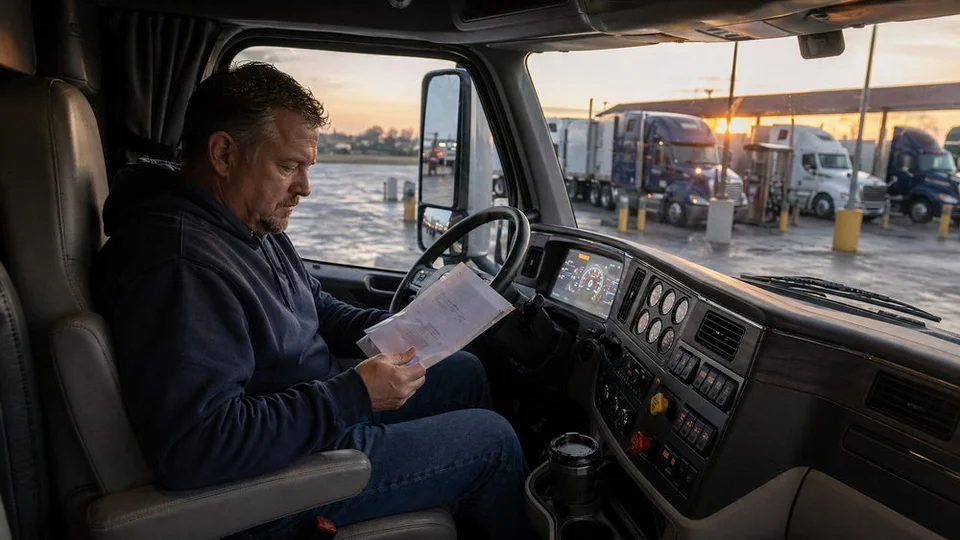
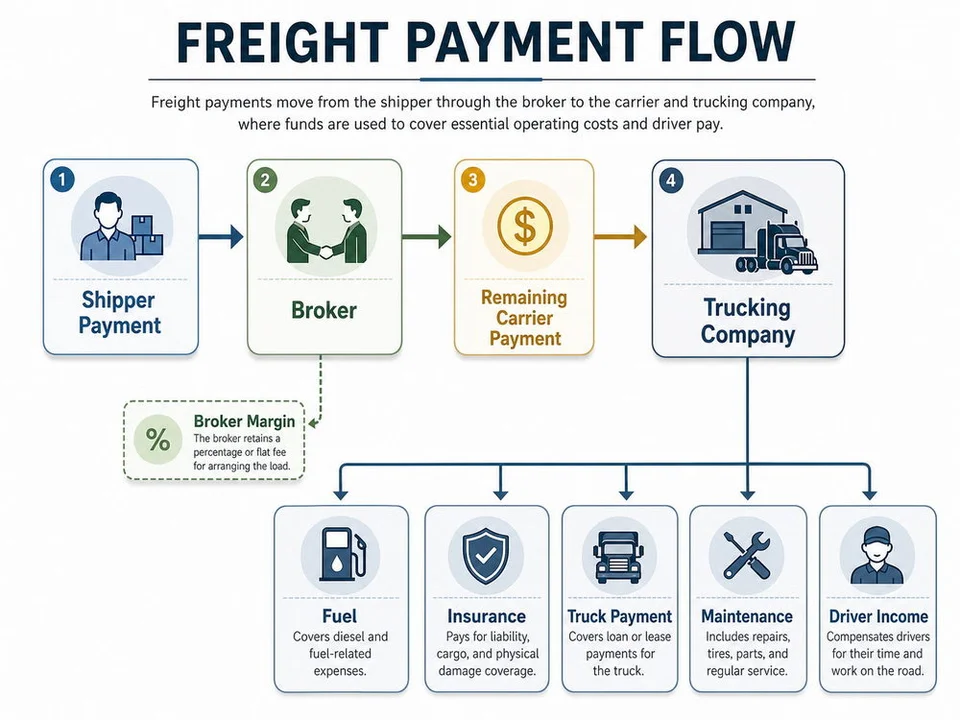
Let’s discuss a feeling that most small fleet owners know too well. You are in the cab at a truck stop; the sun is rising over the horizon, and you look at a rate confirmation for a load you recently pulled. You earned enough to pay for that fuel, the truck payment, and maybe a tiny bit of profit to take home. But in the back of your mind, you can’t help being bugged by the thought, "Yeah, but what did the shipper actually pay for this?”
For decades, that question has run into a brick wall. In the realm of American trucking, the interactions between the person moving the freight and the person brokering the deal have often felt like a one-way street. While carriers have to expose everything – their insurance, safety scores, and capacity – brokers could historically keep the margins they made on each transaction a complete secret. But as we approach May 2026, the Federal Motor Carrier Safety Administration (FMCSA) is on the verge of releasing a new regulation that would change the balance of power on the highway forever.
This is the story of the broker transparency rule, and for small fleets it’s not just about paperwork – it's about survival.
The Old Rule That Nobody Followed
To understand why everyone is fighting so hard in 2026, we have to look back. This is somewhat difficult to believe, but since 1980 there has been a federal law on the books (49 CFR § 371.3) that states that brokers should keep a record of every transaction and share it with the parties involved. In theory, a trucker has always been able to see what the shipper paid.
However, theory and practice do not correlate in the real world. This has been bypassed for decades by the use of “waiver clauses” in contracts by brokers. What they basically tell a small carrier is, "If you want this load, you have to sign away your right to see the records.” And if you are a small fleet, say of two trucks, and you need to keep those two trucks moving to keep your business alive, you sign. But you really don’t have a choice. This has led to what some activists call a “salami slicing” operation, where the margins are cut so fine that the carrier ends up with the crumbs and the middleman takes the cake.
Why May 2026 is the Turning Point
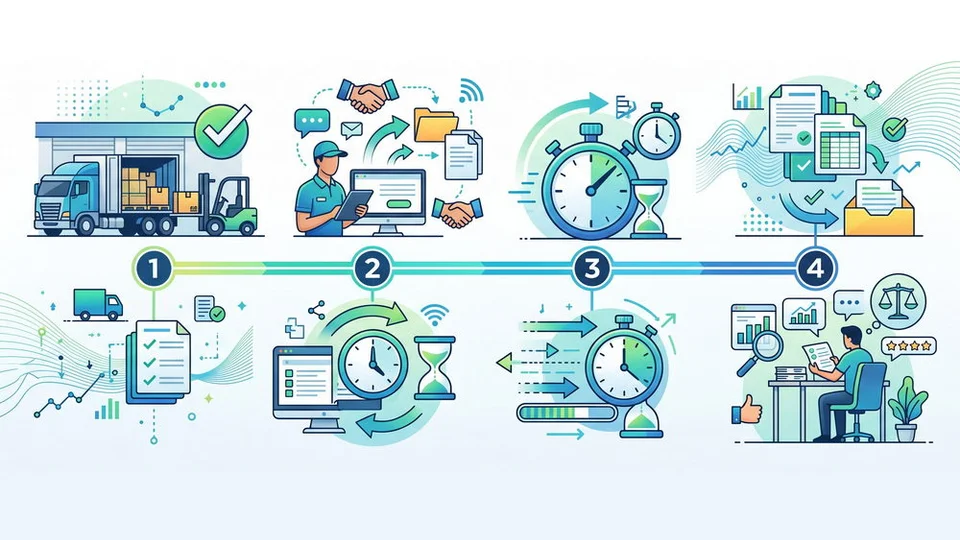
This issue came to the forefront during the pandemic when the already unreasonable freight rates became crazy. The Owner-Operator Independent Drivers Association (OOIDA) and the Small Business in Transportation Coalition (SBTC), among others, are credited with finally getting the government to act on the issue. As a result, the FMCSA has scheduled a second Notice of Proposed Rulemaking (NPRM) for May 2026. This is not just a slight tweaking of the rules. It is an example of a comprehensive attempt to modernize the way money changes hands in the world of freight. The proposal is common-sense and very powerful: brokers are to provide an electronic version of transaction records within 48 hours of a carrier’s request.
But it means much more than just a fast email. The FMCSA broker transparency initiative wants to reframe this from a "right" that you have to fight for into a "regulatory duty" that brokers must perform. In other words, transparency wouldn't be something you ask for as a favor; it would be the law of the land, and failing to provide it could result in a broker losing their authority to operate.
The 48-Hour Window: Why Speed Matters
In the trucking business, information that is a month old is as useless as a flat tire. If you find out three weeks after a haul that a broker took a 40% cut on a load that barely paid your tolls, there isn't much you can do. You’ve already burned the fuel and spent the time.
The 48-hour requirement is designed to give small fleets "actionable intelligence." Imagine being able to see, in almost real-time, which brokers are being fair and which ones are predatory. With margins as tight as they are in 2026 – with diesel prices climbing and insurance premiums through the roof – a small carrier needs to know exactly where they stand.
Small fleets operating on thin margins view this 48-hour window as a vital defense against "income theft." It allows a fleet owner to make better informed decisions about which brokers to work with in the future. If a broker is consistently taking a massive cut while offering you the bare minimum, you can take your equipment elsewhere. In a market where capacity is starting to tighten again, that kind of knowledge is power.

The Battle Lines: Carriers vs. Brokers
Certainly, not everyone is thrilled about this. The industry is currently divided into two very loud camps.
On one side you have the small carriers and the owner-operators. They claim that transparency is the only thing that can bring trust back. They argue that freight fraud is at an all-time high, up 400% by some estimates, and having a clear, documented trail of who paid what is the best way to keep the “bad apples” out of the barrel. For these people, the broker transparency rule is about shining a light in a dark corner of the industry.
On the other side you have large brokers and organizations like the Transportation Intermediaries Association (TIA). They’re not mincing words. They have decried the proposal as “outdated, unnecessary, and burdensome." To put it simply, their argument is, "We are private businesses. Our contracts with shippers are proprietary. Why do we have to show our ‘secret sauce’ to the competition?”
Large-scale carriers like J.B. Hunt have maintained that the rule is "unworkable." They also claim that in complex multimodal moves, where a load could move from a truck to a train and then to another truck, costs were so intertwined that it was nearly impossible to break down what the “truck” portion of the cost actually was. They are also concerned that publishing these rates will create a “race to the bottom” that will reduce the overall efficiency of the market.

More Than Just Dollars: The Fraud Connection
One of the most interesting parts of the discussion in 2026 is how transparency connects to the "fraud pandemic" hitting the supply chain. We are seeing more "cyber-enabled" cargo theft than ever before. Criminals are impersonating brokers, stealing carrier identities, and diverting high-value loads using AI deepfakes and GPS spoofing.
When the payment trail is hidden behind waivers and "confidentiality" clauses, it is much easier for a scammer to hide. Supporters of the FMCSA broker transparency push argue that if every transaction had to be documented and shared electronically, there would be fewer places for fraudsters to lurk. If a carrier can see the original shipper's payment, they can quickly tell if they are dealing with a legitimate broker or a "phantom" intermediary who is just trying to skim money before disappearing into the dark web.

The Chicago Factor: Every Cent Counts
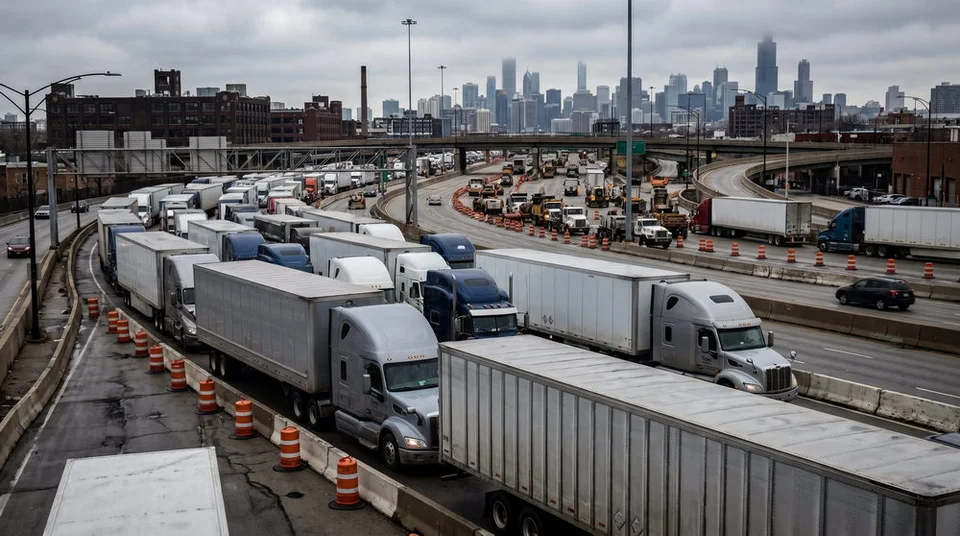
For a company like HMD Trucking, which operates out of the Chicago hub, these pennies and percentages are even more significant. The I-294/I-290 interchange in Chicago is now the most congested freight interchange in the country. When your trucks aren’t being used in a six-year construction project, you’re burning money.
With the high price of congestion and §232 heavy vehicle tariffs in place on newer equipment, combined with increasing labor costs, a small fleet's margin for error is basically zero. In that context, having the ability to determine whether a broker is taking an “excessive margin” is not just curiosity but a business necessity. Carriers need to know if the rate they are getting is a fair representation of the market or if it is simply a broker being greedy.
Will It Actually Raise Rates?
It is the question that all the guys at the truck stop lunch counter are asking. Assuming we win the broker transparency rule, are truckers actually going to make more money?
According to a survey conducted by Overdrive, 79% of carriers believe that it will. They feel that if brokers have to lay their cards on the table, then they won’t be able to offer such low-ball rates. Market analysts are less convinced. They note that freight rates are determined by supply and demand – how many trucks are chasing how many loads. They believe that the rule may redistribute who the money goes to, but it will not affect the total amount of money in the pot.
Even if it doesn’t mean a raise right away, supporters argue that it will create a more “equitable market." It allows the small guy to compete on a level playing field and strips away the information advantage that has enabled the largest brokers to control the industry for so long.
The "Private Contract" Debate
The most contentious part of the discussion is around the concept of “freedom of contract." The large brokers claim that if a carrier chooses to sign a waiver, then they should be allowed to. They feel that private industry deals are no business for the government.
But the 2026 complaint against Total Quality Logistics (TQL) has posed a difficult question for the industry: Can a private contract really override a federal safety regulation? The FMCSA is gearing towards a no on this matter and is trying to make it explicit that transparency is a "non-waivable regulatory obligation." This means that even if you sign a piece of paper saying that you don’t want to see the records, that paper is nothing. The broker would still have to show you the money.
Practical Advice for Small Fleets in 2026
As we wait for the May 2026 NPRM to become a final rule, what should small fleets be doing?
First, keep an eye on your contracts. Even before the rule is final, the "transparency talk" is changing how people do business. Some progressive brokers are already moving toward a "concierge" model where they provide full documentation to build trust with their carriers. These are the partners you probably want to lean into.
Second, get your digital house in order. The new rule will almost certainly require electronic record-keeping. If you’re still running your business off of a yellow legal pad and paper receipts, it’s time to modernize. The FMCSA is moving toward a system where every transaction has a digital fingerprint.
Lastly, don't be afraid to use the data you already have. Even without the new rule, you can use lane averages and 15-day rolling spot rate data to negotiate. When the broker transparency rule eventually hits the books, that data will become even more powerful.
A New Chapter for the Highway
It’s not just a couple more cents per mile that the fight over the load is about. It’s about the heart and soul of American trucking. It’s about whether we want a system of secrets and leverage or a system of partnership and clarity.
Small fleets are the backbone of the U.S. economy, especially across places like the Midwest where they keep the shelves stocked and the factories running. They take the most risk, they are the most exposed to physical danger, and they are the most regulated. Asking for a little bit of honesty from the people who book their loads doesn't seem like too much to ask.
The D.C. lobbyists’ noise will increase as the deadline approaches in May 2026. However, for the driver behind the wheel, the goal remains the same: a fair day's pay for a fair day's work, and the right to know that the deal they signed was an honest one. Transparency is not a cure for everything that is wrong with the freight market, but it’s definitely a good start.