Navigating the FMCSA Motus Registration System and the End of MC Numbers

by Michael Mahler — HMD Trucking
If you’ve been around the trucking industry for more than a minute, you know that change usually arrives in the form of a thick stack of papers or a new electronic device you didn't ask for. The change that struck the industry on October 1, 2025, was nothing of the kind. It wasn't some new engine sensor or an HOS tweak. It was about how your business is identified. The Motor Carrier (MC) number – a sequence of digits that has defined authority in this country for decades – effectively went the way of the paper logbook.
The shift started the age of a single identifier, the USDOT number. This is more than a name change; it is the foundation of the new FMCSA Motus registration system. For many of us, the MC number was a sort of badge of honor, or even a testament to longevity. A low MC number on a door made everyone understand you’d survived the cycles. For the regulators, however, the dual-number system had become a playground for fraudsters and “chameleon” carriers. The government attempts to clean the “front door” of the industry by consolidating everything under one roof.
If you are operating a fleet, then you should know that this is not a “set it and forget it” change. It’s a complete re-imagining of your legal existence. Let’s look into what’s happening, why, and how you can protect your operation from getting caught in the transition.
The End of the "Double Identity"
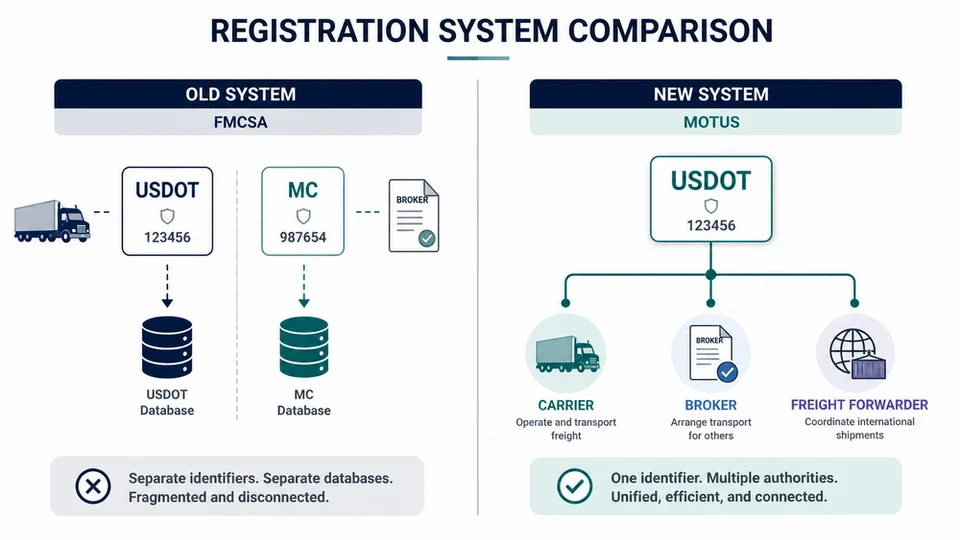
The industry had always operated with a sort of split identity approach. You used a USDOT for safety and an MC number for operating authority. If you were a broker, you had an MC. If you were a carrier, you had them both. It was redundant, confusing for newcomers, and, worst of all, vulnerable to manipulation.
The Federal Motor Carrier Safety Administration (FMCSA) noticed that maintaining two separate databases was like having two different driver’s licenses for one person. It produced data silos. A company could have a horrible safety record under one USDOT number, go out of business, and then just pop back up with a “clean” MC number under another corporate shell. This is the “chameleon carrier” issue that has plagued the industry for decades.
Since October 2025, though, that loophole is mostly sealed. The USDOT number is the “only federal identifier” under the FMCSA Motus registration system. If you want to know whether a company is a broker, a freight forwarder, or a carrier, you check their USDOT number and the type of “suffix” that accompanies this number. It’s cleaner, it’s faster, and it is much harder to hide behind.
What Exactly Is "Motus"?
You’ll be hearing the word "Motus" a lot in 2026. It’s the name of the new, modernized registration platform. Think of it as the "Amazon-ification" of the FMCSA’s back office. The old systems – like the Unified Registration System (URS) – were built on technology that was, frankly, ancient. They didn’t talk to each other, they were prone to errors, and they were a nightmare to navigate on a mobile device.
Motus is designed to be a unified, mobile-friendly dashboard. Instead of jumping between three different websites to update your biennial MCS-150, check your insurance filings, or change your process agent, you do it all in one place. It uses smart logic to catch errors while you’re typing them, which should, in theory, stop those annoying form rejections that can sideline a truck for days.
But here is the catch: because it’s a more intelligent system, it’s also much more inquisitive. Motus isn't just taking your word for it anymore. It’s verifying your identity and your business address in real-time.
The Power of the Suffix
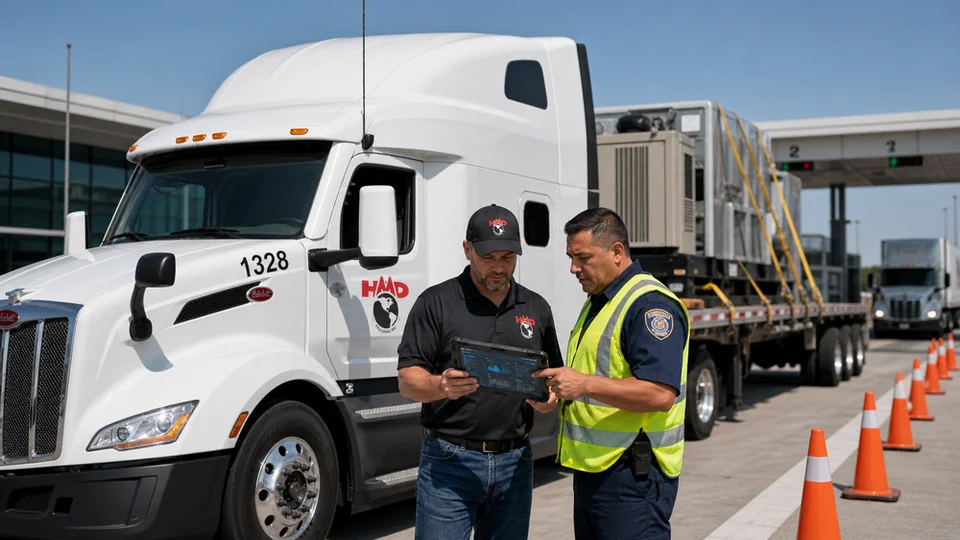
So, if the MC number is gone, how do we tell who does what? This is where the suffix system comes in. Under the FMCSA Motus registration system, your authority type is baked right into your DOT number in the agency's internal records.
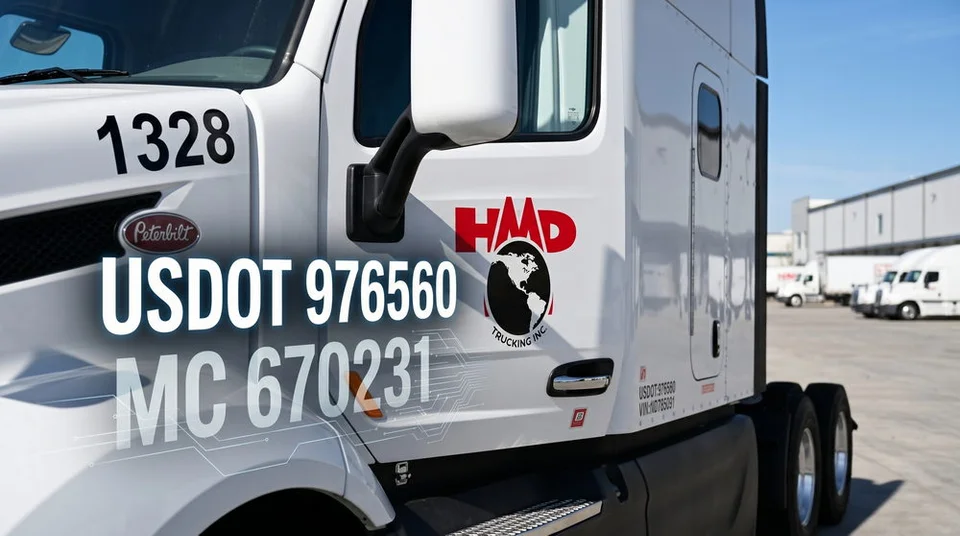
While the physical numbers on your truck doors still only need to show the USDOT digits (you don’t need to repaint your trucks to add a suffix, thank goodness), the digital fingerprint of your company will look different. You might see designations like "USDOT 1234567-C" for a carrier or "-B" for a broker. If you hold multiple types of authority – say you’re a carrier that also has a brokerage arm – you will have multiple suffixes tied to that one DOT number.
This consolidation makes it much easier for shippers and brokers to verify who they are dealing with. It eliminates the "gray market" of buying and selling old MC numbers. In the past, people would pay thousands of dollars for a "vintage" MC number because it made them look established. The FMCSA has now made it clear: you cannot buy, sell, or lease a USDOT number. If you get caught trying to "identity-hop," they won't just fine you; they will revoke every registration tied to your name.
The Identity Crisis: Identity Proofing and IDEMIA
The biggest issue for the carriers in 2026 is the need for identity verification – something that wasn’t required until now. You can’t just go online and change your address. All Motus users must have a verified account with Login.gov.
It is part of a larger federal initiative in the area of "identity proofing." As the company official, you have to prove that you are who you say you are. This frequently requires interacting with a company called IDEMIA, where you may need to upload a government ID or even verify your identity in person.
Why such a hassle? Because of "ghost offices." For years, shady operators would register their business at a P.O. Box or a commercial mail drop where hundreds of other carriers were also registered. They didn’t have a real office, real trucks, or a real manager. They were just shells. Motus uses business-address validation to flag these addresses. If your Principal Place of Business doesn't look like a real physical location where you keep records, your registration is going to get flagged.

The "48-Hour Rule" and Your PPOB
This brings us to a critical operational point: the Principal Place of Business (PPOB). Under the new rules, your PPOB must be a physical address where your senior management oversees operations and where your safety records are kept.
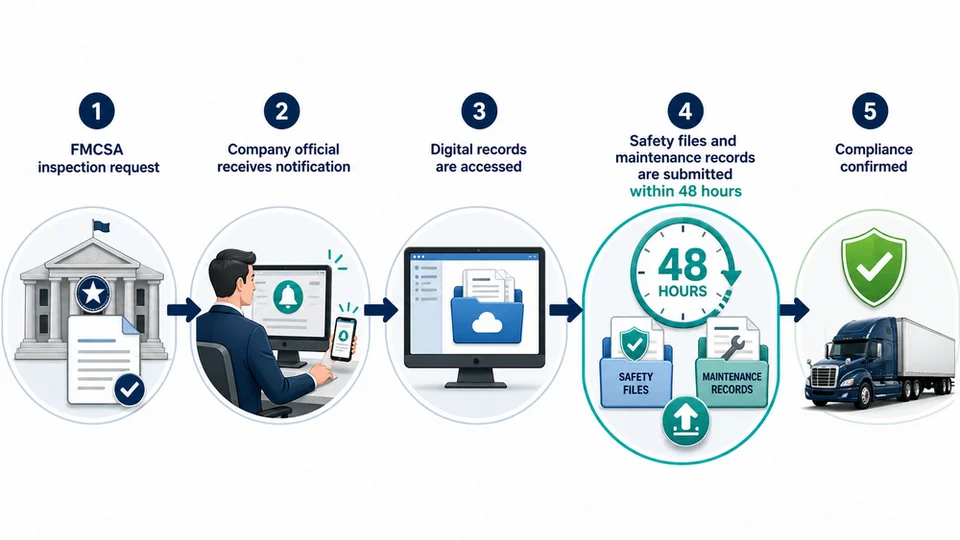
But here is the part that catches people off guard: you must be able to make those records available for inspection within 48 hours. In the age of Motus, the FMCSA is getting much more aggressive about checking these locations. If an investigator calls and you can't produce your driver qualification files or maintenance records within that 48-hour window because they are "in a different state" or "lost in the cloud," you’re looking at an immediate out-of-service order.
It’s time to review how you keep your records. Is your documentation centralized? Have the files been indexed? Those of you who are still using paper are complicating your life a lot. The FMCSA Motus registration system is designed for a digital-first industry. Moving your records to an electronic format isn’t about following the modern trends anymore; it will now define if you are able to survive the 48-hour countdown.
Steps To Auditing Your Fleet
So, what should be on your checklist now to stay ahead of this?
- Audit Your Vehicle Markings: Even though you don’t have to remove your old MC numbers immediately, you must ensure your USDOT number is displayed correctly. The USDOT is now the only number that matters for roadside enforcement.
- Scrub Your Contracts: Every contract you have with a shipper, a broker, or a factoring company likely references your MC number. Start the process of updating these documents to reflect your USDOT number as your primary identifier.
- Verify Your Portal Account: Before you can even get into Motus, you need an active FMCSA Portal account. Log in today. Make sure the Company Official listed is actually the owner or a key employee – not an outside consultant.
- Check Your PPOB: Is your registered address a P.O. Box? If so, change it now. You need a physical location that can pass a visual audit by the system.
- Get Comfortable with Login.gov: If you don’t have a Login.gov account tied to your official business email, set one up. This is the key that unlocks the Motus dashboard.

Phased Rollout: What Stage Are We At?
The rollout of the FMCSA MOTOUS registration system is split into phases. The first phase of implementation that started in late 2025 gave early access to supporting companies, such as insurance providers and BOC-3 filers, so that they could set up their accounts in advance.
We are now in Phase 2, which means a full rollout to the whole industry. This is the moving day for motor carriers, brokers, and freight forwarders. The FMCSA pointed out that the transition is going to be gradual: they aren’t going to turn off the switch and delete all the legacy docket numbers (MC/FF/MX) on day one. The numbers will remain operational in the background for some period of time so that software providers like load boards and factoring companies have an opportunity to adjust their systems.
However, don’t be deceived by this measured approach. The agency is already collecting feedback for Phase 3, "Continuous Improvement." The system will only become stricter and more automated. The intention is to make it “frictionless” for the good guys and a closed door for the bad guys.

Contemplating the Bigger Picture
Let’s pause for a moment to consider how such a change impacts the trucking culture. For many years the MC number was a tangible thing. It was included in the “alphabet soup” on the cab side. Taking it down may be perceived as losing a piece of history. But once you realize the amount of fraud involved – $1 billion lost annually in scams and the “salami slicing” of rates by ghost brokers – the argument for a more secure system becomes very clear.
The shift to Motus is really a shift toward accountability. The FMCSA is also attempting to help reintroduce a level of professionalism that some feel has been lost in the digital shuffle – through the requirement of identity verification and physical business locations. When a shipper hands over the load or a driver signs a lease-purchase agreement, they have to be confident about who is on the other side of the screen.
Conclusion: The Road Ahead
The death of the MC number is not the end of the world; it is the end of an era. The FMCSA Motus registration system is a powerful tool; however, it only works if you know how to use it. If you decide to resist or ignore the verifications, you will eventually end up under an out-of-service order.
Spend some time this week to review your digital identity. Clean up your portal account, verify your address, and ensure that your team is aware that the USDOT number is now the king of your compliance world. The industry is becoming leaner, cleaner, and more digital. It’ll take time to get used to, but for those of us who plan on being here for the long haul, it’s a crucial step toward a safer and more honest highway.