Defending Against Cargo Theft: The Threat of Deepfakes and GPS Spoofing
by Michael Mahler — HMD Trucking
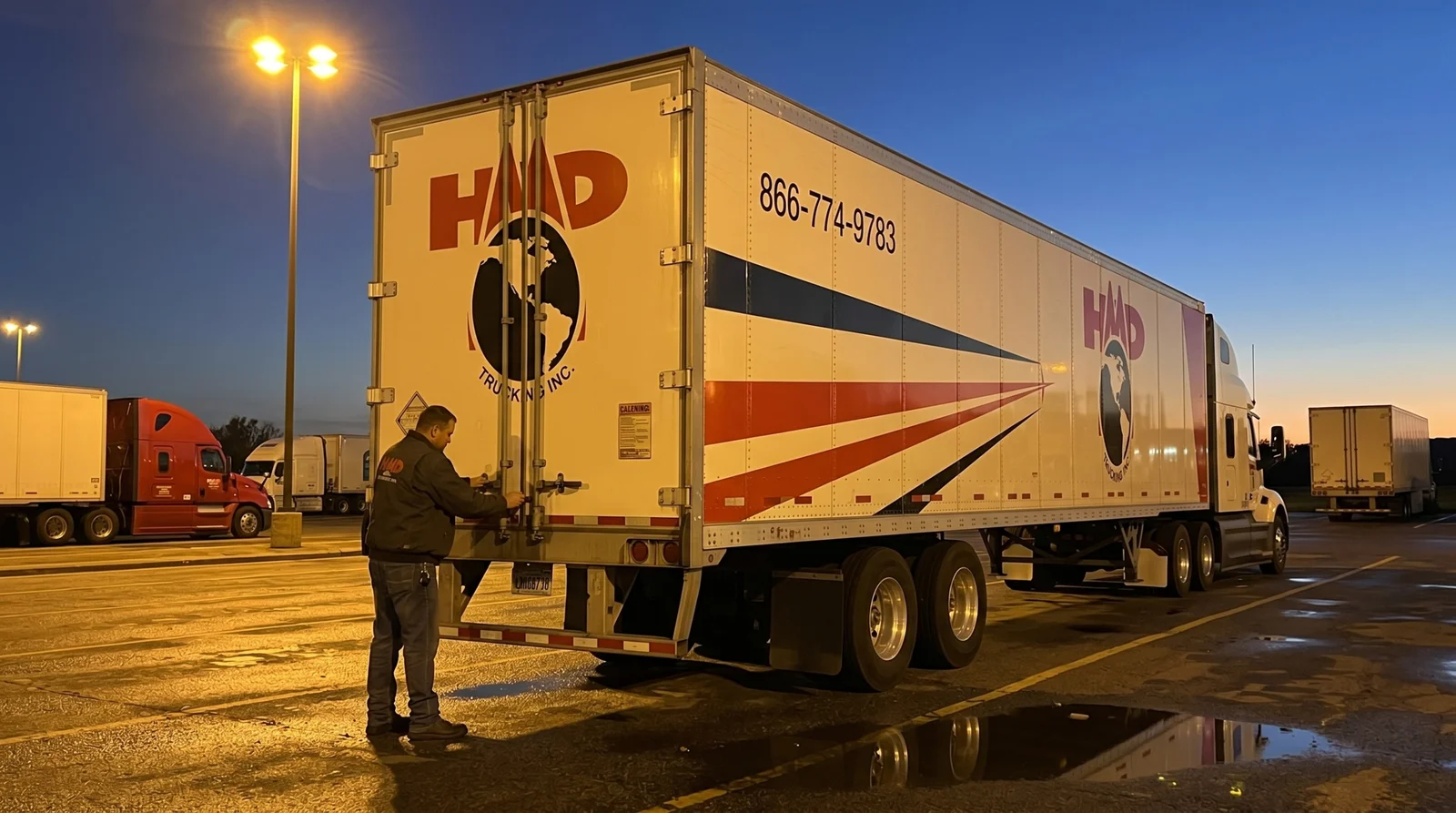
From our headquarters in Chicago – the historic and modern heart of North American intermodal transport – HMD Trucking has maintained a front-row seat to the rapid evolution of logistics. Operating a modern fleet of late-model semi-trucks across over-the-road (OTR) and regional lanes, we have watched the threat landscape shift beneath our wheels.
For decades, fleet security was a physical discipline. It was measured in the strength of high-security trailer door locks, the height of perimeter fencing at terminal yards, and the vigilance of professional drivers parked at highway truck stops. Today, those physical barriers are no longer sufficient. We are witnessing an unprecedented transition from traditional "smash-and-grab" highway robberies to a highly sophisticated, borderless, and cyber-enabled epidemic: strategic cargo theft. Organized international criminal syndicates are now targeting cost-dense shipments by deploying weaponized generative artificial intelligence, identity cloning, and radio frequency deception.
As an asset-heavy carrier, HMD Trucking believes that the transport industry cannot rely on “fighting yesterday’s war” and must begin to adopt security not only as a reactive measure but also as a proactive one. Tendering a shipment cannot be seen as a mere transaction of trust any longer. Fleets must adopt a layered, zero-trust cyber-physical architecture that tracks and verifies drivers, dispatchers, signals, and documents throughout the life cycle of a load.
The Macro-Economic Threat Landscape and Geographical Realities
The financial impact of modern-day supply chain crime has become catastrophic. Studies conducted across the industry by the American Transportation Research Institute (ATRI) reveal that annualized losses from stolen freight as well as related fraud in the logistics industry now amount to between $6.6 and $7.0 billion out of the worldwide transport economy. It reflects in more than $18 million a day lost in the United States only. The burden of these crimes falls heavily on both carriers and logistics providers: motor carriers suffer average yearly theft losses exceeding $520,000, and logistics service providers (LSPs) face an average of nearly $1.84 million in annual damages.
What is perhaps most unsettling about the current threat is not that there are more incidents than in the past, but that organized rings have now adopted a selection pattern specifically targeting high-value items. According to a report from Verisk CargoNet, the total number of supply chain crime incidents across North America remained fairly even between 2024 and 2025, with 3,607 events in 2024 and 3,594 in 2025, but the estimated financial losses increased by 60% to just shy of $725 million. This asymmetry is caused by the growth of “strategic theft,” where thieves avoid low-margin bulk freight and systematically target higher value, cost-dense commodities. As a result, the average loss value per incident rose by 36% between 2024 and 2025, increasing from $202,364 to $273,990.
| Metric | 2024 Baseline | 2025 Data | Change (%) |
| Total Supply Chain Crime Incidents | 3,607 events | 3,594 events | -0.36% |
| Confirmed Cargo Theft Reports | 2,243 incidents | 2,646 incidents | +18.00% |
| Estimated Financial Losses | $454.00 million | $725.00 million | +59.69% |
| Average Loss Value Per Theft | $202,364 | $273,990 | +35.39% |
This economic threat is geographically concentrated but constantly shifting. Historically, cargo crime was localized to the major import hubs of Southern California, Texas, and South Florida. Today, while California remains the most heavily impacted state (recording 1,218 incidents in 2025), targeted enforcement and physical security hardening in Los Angeles County have forced criminal networks to migrate their operations. We have observed cargo theft activity surge in historically lower-risk regions like Kern County (up 82%) and San Joaquin County (up 44%).
At the same time, the Northeast Corridor has become a high-threat area. New Jersey’s proximity to the massive consumer markets of New York City led to a 50% increase in cargo theft in this area in 2025, followed by a 119% year-over-year jump in the first quarter of 2026. Similar geographic dispersion is observed in Indiana, up 30% in 2025, and Pennsylvania, up 24%, again reflecting the use of major regional trucking lanes by transnational networks to evade weaker enforcement territories.
The Shift to Strategic Freight Theft and Carrier Impersonation
At HMD Trucking, we understand that the largest threat to our operation is no longer “straight cargo theft," that is, unauthorized physical yard breach, lock cutting, or trailer drop-yard thefts. Our drivers still practice strict, secure parking protocols, but the real war being fought within the industry is that against strategic freight theft, commonly known as “theft by deception." Strategic cargo theft has experienced an astronomical rise of roughly 1,500% since 2022, now accounting for over one third of cargo crime on the continent.
Unlike straight theft, strategic theft relies entirely on digital manipulation and psychological grooming to trick shippers, brokers, and carriers into voluntarily handing over high-value freight. The operational workflow of a modern cyber-enabled strategic theft scheme typically unfolds in a few key stages:
- Initial Infiltration: Cybercriminals use sophisticated phishing campaigns to harvest credentials from freight brokers and motor carriers. This enables them to get inside internal systems, where they silently monitor emails and screens of dispatchers using remote access tools.
- Identity Cloning: Using stolen credentials, the criminals log into the Federal Motor Carrier Safety Administration (FMCSA) database. They modify contact details and insurance information of a legitimate, vetted carrier to match their own operation, all while the real carrier remains completely unaware.
- Bidding and Double Brokering: The threat actors bid on premium shipments that are posted on online load boards under this hijacked or cloned identity. After being awarded the load from a broker, the criminals act as a fake broker and illegally re-broker (“double-broker”) the load; employing this scheme, they find an ethical, legitimate transportation company that believes the load is also coming from the promised brokerage house.
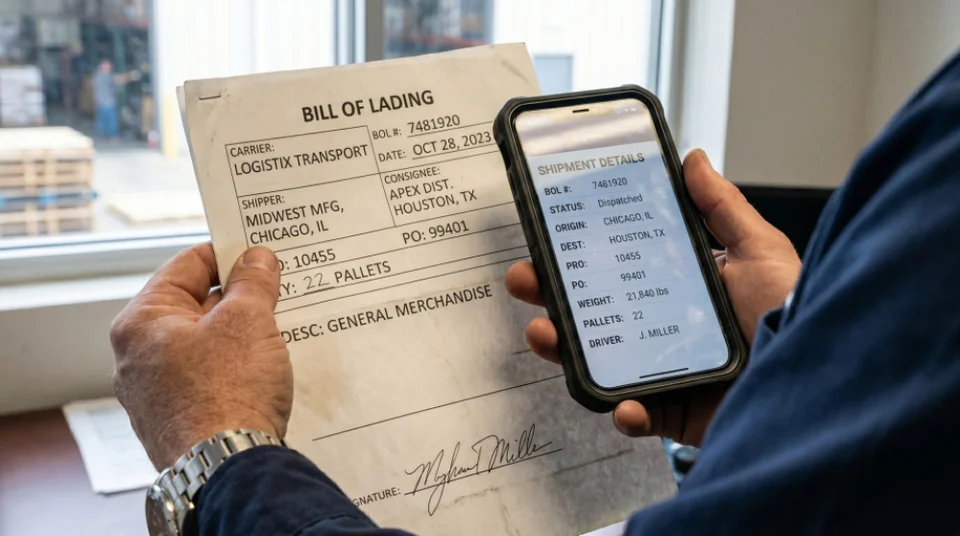
- Cargo Diversion: The criminals send the actual driver a fabricated Bill of Lading (BOL) containing altered delivery instructions. The driver unwittingly transports the cargo to a designated cross-dock or transloading point, where the freight is quickly transferred to secondary vehicles and disappears before the original broker realizes the load is missing.
A prominent real-world example of this digital identity infiltration is the case of Tanager Logistics. International criminal networks cloned Tanager’s DOT numbers, corporate profiles, and FMCSA registration credentials. The scammers then used domain spoofing and virtual private networks (VPNs) to broker unauthorized loads to third-party carriers in Tanager's name, leaving the company to untangle a web of cargo liability claims for loads they never physically handled.
This systemic vulnerability is further amplified by the commercial acquisition of legitimate motor carriers. To avoid the computerized vetting system that flags brand new Motor Carrier (MC) numbers, organized crime groups are also simply buying legitimate, existing motor carrier authorities with safe driving and good load histories. These are transacted through an unregulated peer-to-peer marketplace and social media channels. After the purchase is made, the criminal ring acts behind the shield of the purchased company’s record of compliance and secures high-value shipments before executing a coordinated exit.
Generative AI: The New Threat Vector
The fast democratization of generative AI has completely changed the safety profile of our industry. From HMD Trucking’s perspective, the most dangerous aspect associated with generative AI is that it eliminates the “human clues” of freight fraud, such as poor formatting in emails, obviously bad grammar, or awkward wording.
According to the 2026 Global Cybersecurity Outlook of the World Economic Forum, 87% of companies reported a rapid rise in AI-related vulnerabilities as “the fastest growing cybersecurity threat,” largely due to companies rolling out automated systems quicker than they could develop secure governance structures.
Synthetic Document Generation
With advanced Large Language Models (LLMs) and automated image processing pipelines, cargo thieves can create legal and visually perfect shipping documents within seconds. These artificial conventions encompass duplicitous Certificates of Insurance (COI’s) with forged underwriter stamps, fake rate confirmations produced to replicate the precise layouts of premium brokers, and fabricated BOLs designed with the carrier logos of particular shippers.
Real-Time Voice Deepfakes and Impersonation
The greatest immediate danger to dispatch crews currently comes in the form of real-time AI voice cloning. Existing commercial neural voice cloning software is able to synthesize highly realistic-sounding human speech using an audio clip of as little as 30 seconds. These small excerpts are readily gathered from public corporate webinars, marketing videos, or social media clips.
In a typical “mid-transit rerouting scam,” a driver or dispatcher answers a call from someone with exactly the same voice as his main agent or terminal manager. In this case the cloned voice will inform the victim that due to an emergency, such as a facility fire, dock closure, or credit issue, the shipment must be rerouted at once to another consignee address.
The psychological impact of this technique is highly effective; employees hear what their brain interprets as a normal, familiar voice and bypass standard out-of-band verification procedures. By the time the physical mismatch is discovered, the cargo has already been transloaded, and the digital trail has gone cold.
This exposure is linked to an international criminal ecosystem. Large-scale scam centers in Southeast Asia function as highly structured corporate entities complete with software development, translation, and human resources departments. In 2024, these networks produced over 10 billion in losses by fraud in the U.S. and used sophisticated generative AI bots in attacks on Western logistics companies.
These international actors’ level of complexity is evident from the recent emergence of ultra-specialized scammers with expertise in market terms, business finance, and psychological manipulation. This level of intellectual capital is now being applied directly to logistics dispatchers, as AI-generated interactions have been crafted to exactly mirror the kinds of messages, language, and urgency now experienced by the legitimate logistics dispatcher.

Radio Frequency Warfare: GPS Jamming vs. GPS Spoofing
Since more trucking fleets are using automated, telematics-driven tracking systems, criminals apply radio frequency (RF) manipulation to thwart such security measures. At HMD Trucking, we distinguish clearly between the brute-force disruption of jamming and the insidious deception of spoofing.
GPS Jamming
GPS jamming is an untargeted, brute-force form of attack that aims to interfere with GNSS signal reception. Conventional GPS signals for civilian use are exquisitely faint by the time they reach Earth. An illegal, battery-powered RF jamming device is set near the vehicle’s telematics unit and broadcasts a high-powered noise signal on the same frequency band of the real satellite signal.
Because the jammer's local power is significantly higher than the satellite's power, the receiver is unable to calculate a positioning solution. The tracking device goes silent, displaying its last known coordinates on the shipper's dashboard while the cargo is stolen.
GPS Spoofing
GPS spoofing is a much more complex and insidious attack. Unlike the jammer, the spoofing device does not disrupt the signal but rather transmits false GNSS signals that “resemble the structure of legitimate satellite signals." The goal is to have the receivers’ tracking loop get “fooled” without setting off a signal-loss alarm.
It is accomplished with cheap Software Defined Radios (SDRs) such as the HackRF One and open-source GNSS simulation software for a total under $300. The received power level of the spoofing transmitter is slightly elevated compared to the true satellites. As soon as the spoofing transmitter captures the tracking loop, it slowly shifts the simulated pseudoranges, leading the vehicle's positioning software to calculate a false coordinate path.
This leads to what is described as the “spoofing paradox” – whereby the jammed device immediately shuts down and dispatchers are informed, the spoofed device continues to transmit information about its progress on its predetermined path. The truck appears to the dispatcher to be on course as it should but is in fact being driven to an unvetted warehouse.
A real-world example of these signal-level attacks is a sensationalized, $1 million case of hijacked premium tequila. In this heist, the thieves copied the digital identity of the carrier, finished the live pickup, and then turned on the onboard SDR spoofing device.
While the broker’s automated tracking platform displayed the truck moving as expected toward its destination, the truck was actually driven to an unmonitored cross-dock where the cargo was unloaded and distributed. The theft was only discovered days later when the legitimate receiver reported that the load had never arrived.
Defensive Paradigms: Layered Cyber-Physical Architecture
Protection against the modern, technology-based cargo thief requires a multi-faceted, zero-trust security architecture. We don't separate physical security from cyber defense at HMD Trucking; it is one mission.
Hardware and RF Mitigation
To defend against GNSS manipulation, transportation fleets must move beyond basic receiver modules. This is achieved by combining three distinct technical disciplines:
- Inertial Sensor Integration (Dead Reckoning): Modern telematics units run filters that cross-verify GPS coordinates against physical vehicle dynamics captured by an onboard Inertial Measurement Unit (IMU) and wheel encoders. If the incoming GPS telemetry indicates a geographic position that disagrees mathematically with the vehicle's physical movement, the system rejects the satellite measurements and alerts dispatchers.
- Cryptographic Signal Authentication (Chimera): Developed by the Air Force Research Laboratory (AFRL), the Chips-Message Robust Authentication (Chimera) protocol injects cryptographic signatures into the GPS signal, preventing SDR-generated spoofed signals from being accepted by the receiver.
- Advanced Antenna Arrays: Controlled Radiation Pattern Antennas (CRPA) use multi-element arrays to dynamically calculate the angle-of-arrival of incoming RF signals. If an SDR-generated spoofing signal is transmitted from a ground-based source, the CRPA identifies the anomalous low-elevation angle and applies digital beam-forming to nullify the interference.

The Oak Ridge National Laboratory Spoofing Detector
In April of 2026, a research team at the Oak Ridge National Laboratory (ORNL) – including Austin Albright and Sarah Powers – developed a highly sensitive, portable GPS spoofing detector funded by the National Nuclear Security Administration's Office of Radiological Security.
The system is able to work independently of a GPS receiver and without the previous knowledge of available GPS signals. Utilizing an onboard software-defined radio, the device captures raw radio frequencies and applies advanced mathematics directly to the received signals.
An embedded graphics processing unit (GPU) processes these mathematical calculations in real time, allowing the detector to identify location, time, and data spoofing while the vehicle is in motion. Crucially, the ORNL detector can distinguish spoofed signals from authentic ones even when the counterfeit signals are transmitted at the exact same power level as the real satellite signals, a capability not found in prior commercial systems.
Platform Security and Behavioral Analytics
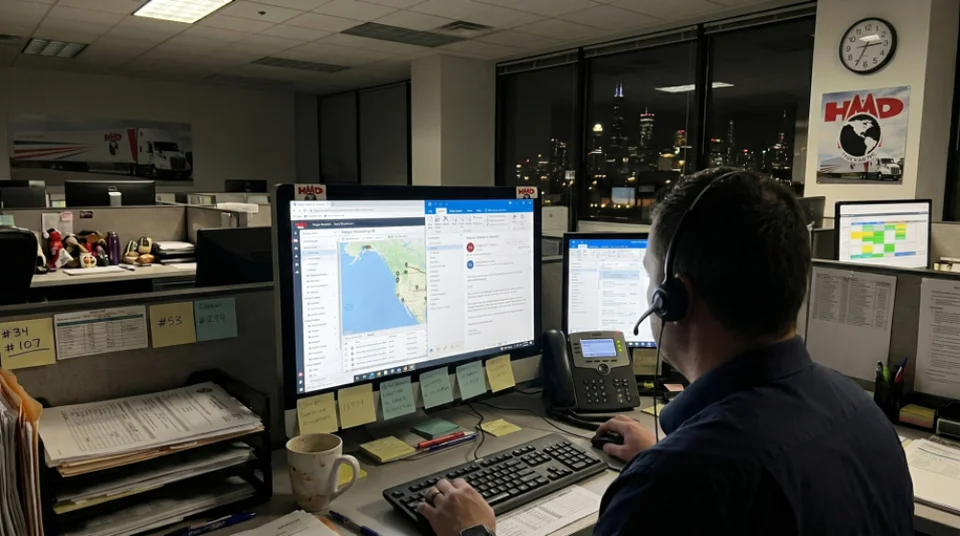
Logistics platforms are increasingly deploying real-time trust layers to identify post-login account abuse and unauthorized data access. AI-driven behavioral analytics engines establish baselines of normal activity for every user, dispatcher, and carrier. The system calculates dynamic risk scores based on operational checkpoints converted into structured data.
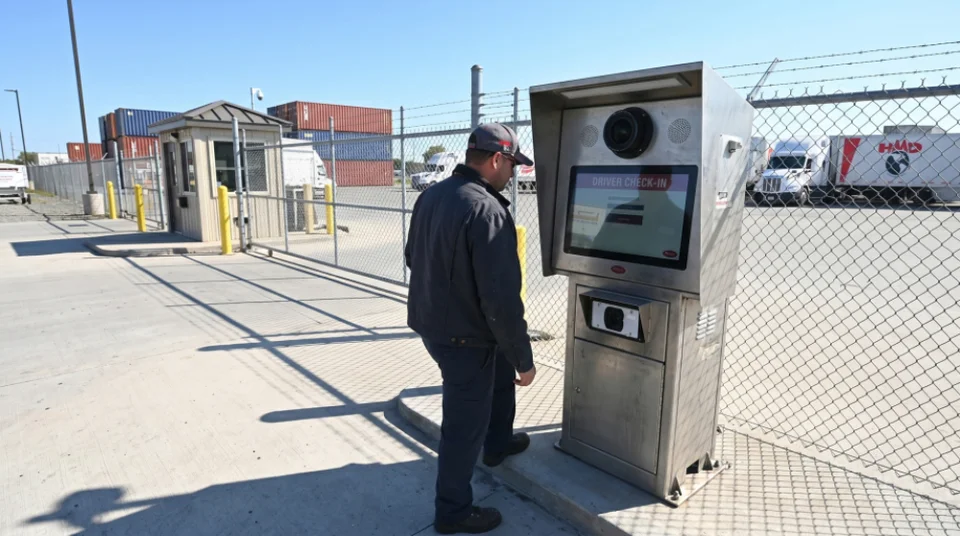
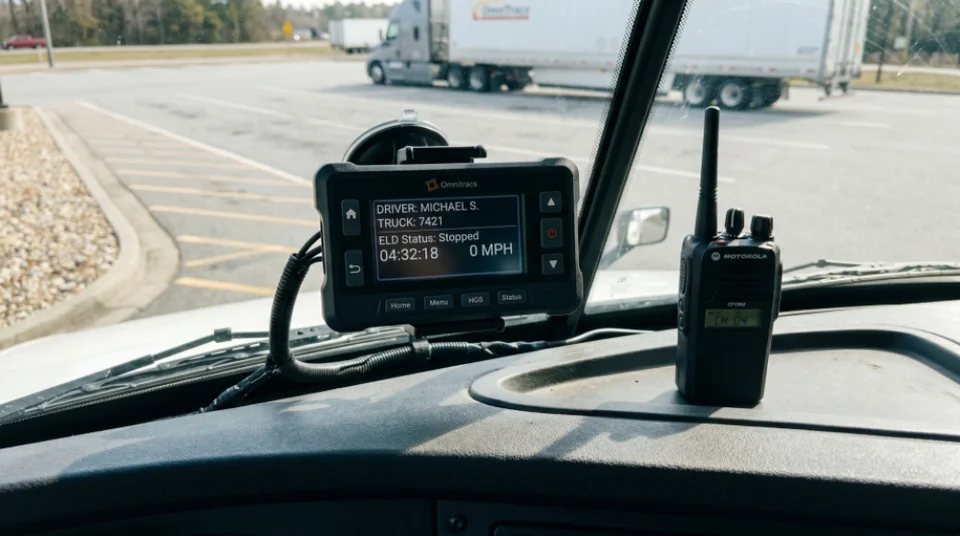
At pickup and delivery locations, physical check-in kiosks equipped with high-resolution cameras capture driver identifications, complete automated driver's license scanning, and perform Optical Character Recognition (OCR) on license plates and USDOT markings. This physical data is cross-referenced in real time with electronic logging device (ELD) telematics, carrier registration databases, and the digital booking details.
If the system identifies that something is wrong, such as a different DOT number, the substitution of a trailer, or access at an hour nobody should be accessing the unit – it will alert security personnel immediately. Instead of full shutdowns, platforms use gradual escalation options, in which low-risk shipments will continue with automated screening, medium-risk shipments will be flagged for extra out-of-band vetting of shipment contents, and high-risk red flags will prompt requiring manual approval by an overseeing supervisor.
The Human Firewall: The 5-Habit Dispatcher Checklist
Technology alone will not prevent social engineering attacks. Logistics dispatchers have to cultivate five disciplined verification habits in their booking process when dealing with new brokers or carriers:
- Verify Broker Authority and Bond Status: check the broker on the FMCSA's SAFER portal (safer.fmcsa.dot.gov). Their operating authority should be active, the address should match the physical address, and they must have an updated bond under the new broker bond (75,000$) requirement, which became effective on January 16, 2026.
- Verify the phone number independently: Don't trust the phone number on an incoming rate confirmation, as it can be spoofed. Instead, verify the broker's official registered phone number from their public regulatory filings and call the number directly to confirm the load was actually booked by their representative.
- Detect email domain spoofs Character-by-Character: Look carefully at the sender's email domain for lookalike characters, such as substituting the letter "l" with the number "1" (e.g., [email protected] is used to impersonate [email protected]). Search the domain on search engines since legitimate service providers have live, established websites, while spoofed domains do not.
- Require Credit Holds and Factoring Checks: Conduct a credit check for all new brokers using a factoring company’s credit service or credit resources such as TransCredit. If a broker requests the dispatcher to avoid this process so the load is not left sitting, such urgency is to be considered red flag behavior.
- Never Accept Mid-Transit Reroutes Without Callback Verification: Establish a strict policy that no driver or carrier should accept any changes while in transit without a verification code that they receive out-of-band. If, for example, they get a call from a cloned voice of an executive or a broker demanding a change, they should be instructed that the call must be terminated, and a callback must be initiated via trusted channels.
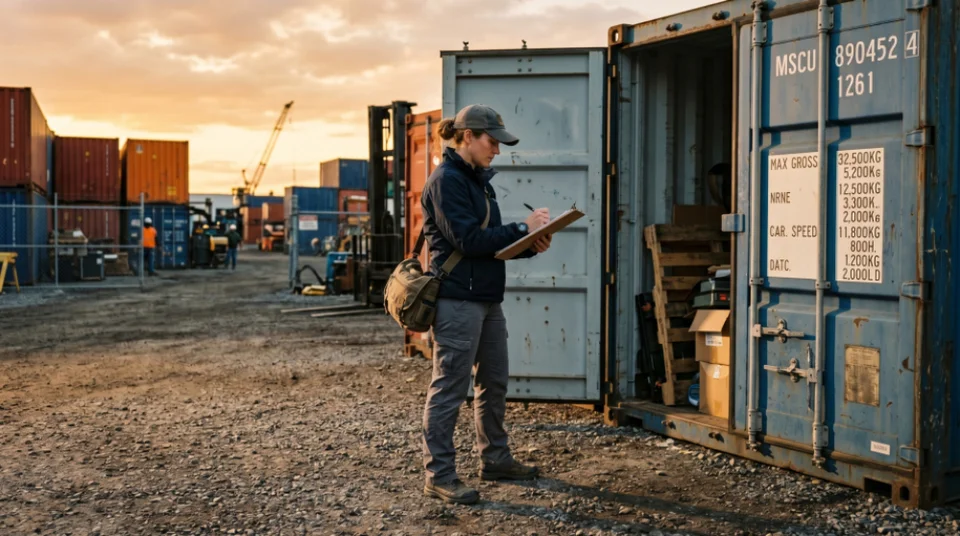
These protocols must be complemented by physical security measures. Shippers should verify that the carrier name on the physical truck doors is the same as that on the BOL; this is one of the clearest physical signs of an unauthorized double brokered load.
On top of that, each trailer door should be secured with a high-security bolt seal or an electronic smart seal that can send cellular alerts the instant it is compromised. This digital safeguard has to be supplemented with physical deterrents, such as kingpin locks, air cuff locks, and/or landing gear locks that will provide a physical resistance layer and delay a cargo thief, thereby giving security personnel additional time to respond to alerts.
Regulatory Frameworks and Legal Hurdles
The legal and regulatory framework presents another problem in combating cyber-enabled cargo theft. Criminal organizations cross municipal, state, and international lines, and local law enforcement may not have jurisdiction or capability to track or arrest these groups.
FMCSA Enforcement Gaps
A primary operational vulnerability resides within the FMCSA database itself. The agency‘s complaint database has collected over 80,000 unresolved complaints, indicating that federal enforcement capacity has not adapted to the magnitude of freight fraud.
To address this gap, the FMCSA implemented a new identity verification process in the Unified Registration System (URS). Under this requirement, all new applicants registering for a USDOT number must submit a facial biometric scan to check their identity to prevent carriers who do not appear to have adequate safety or fraud records from closing down and reopening under a new MC number immediately.
However, the efficacy of this biometric control is limited by the FMCSA's underlying statutory authority. Currently, the FMCSA lacks the legislative authority to impose civil penalties or proactively remove fraudulent actors from its systems, a shortfall recognized by lawmakers. All authority records are collected under one USDOT number, but without enforcement power, the database is still subject to exploitation.
Also, prosecution is still difficult because the threshold for felony cargo theft charges differs by state. This lack of standardization allows criminal syndicates to target jurisdictions with higher felony thresholds, minimizing their legal risks.
Legislative and Investigative Initiatives
In response, logistics coalitions are urging the bipartisan Combating Organized Retail Crime Act to be passed. This legislation would expand federal powers to prosecute cargo theft networks and establish an Organized Retail and Supply Chain Crime Coordination Center within Homeland Security Investigations (HIS) and the Department of Homeland Security (DHS). This would be a centralized office facilitating real-time information exchange and joint cross-border operations between local, state, federal, and international law enforcement agencies.
In the high-stakes corporate arena, private investigations have transitioned toward litigation-grade, courtroom-ready standards. Detective agencies such as Pinkerton employ undercover detectives, real-time CCTV analysis, operational log reviews, and local fencer tracking to trace stolen goods to their source.
As delays in initiating an investigation drastically affect the probability of load being recovered, logistics companies must establish formal escalation protocols for responding immediately to the incident, informing law enforcement, insurance carriers, and industry databases such as Verisk CargoNet. If a logistics company participates in industry-wide sharing networks, it can monitor any changes and vulnerabilities and react to emerging cyber-physical security threats proactively.

The HMD Trucking Outlook: Securing the Future of Freight
At HMD Trucking, we refuse to accept that strategic cargo theft is merely a cost of doing business in the digital era. We recognize that the trust of our shipping partners is our most valuable asset, and that protecting that asset requires continuous, aggressive innovation.
By unifying physical security protocols with cutting-edge cybersecurity standards – including multi-factor authentication, out-of-band callback requirements, EKF-driven dead reckoning, and real-time behavioral analytics – we have turned our fleet into a hard target for even the most sophisticated international syndicates.
The modern semi-truck is no longer just a mechanical tool for moving dry van or flatbed freight; it is a highly secure, connected node in an increasingly complex digital landscape. By taking a proactive, zero-trust stance, asset-based carriers like HMD Trucking are ensuring that the open roads remain safe, transparent, and resilient against the cyber threats of today and tomorrow.