It is common knowledge that the world of occupations is highly complex. Within every one, there are many subdivisions. The same is true for drivers. Their realm is also quite diverse: for example, among truck drivers, there are a lot of categories depending on the truck type and distance of haulage.
Today, we will discuss the most complex and demanding career, OTR, and answer the question: what is an OTR truck driver?
Contents:
- What Is an OTR Truck Driver?
- Difference Between OTR, Regional, and Local
- Advantages of Over-the-Road Trucking
- Interested in OTR Trucking?
What is an OTR Truck Driver?
The OTR (over-the-road) truck driver is a synonym for “long-haul trucker”. They stand out from other truck drivers as they cover long distances within the United States and can even haul freight to Canada or Mexico. The drivers can be away from their homes for weeks or months, typically covering around 2,200-2,700 miles a week, basically living on the road. For them, the Class A CDL is the best license that opens the door to every opportunity with an enormous list of vehicles.

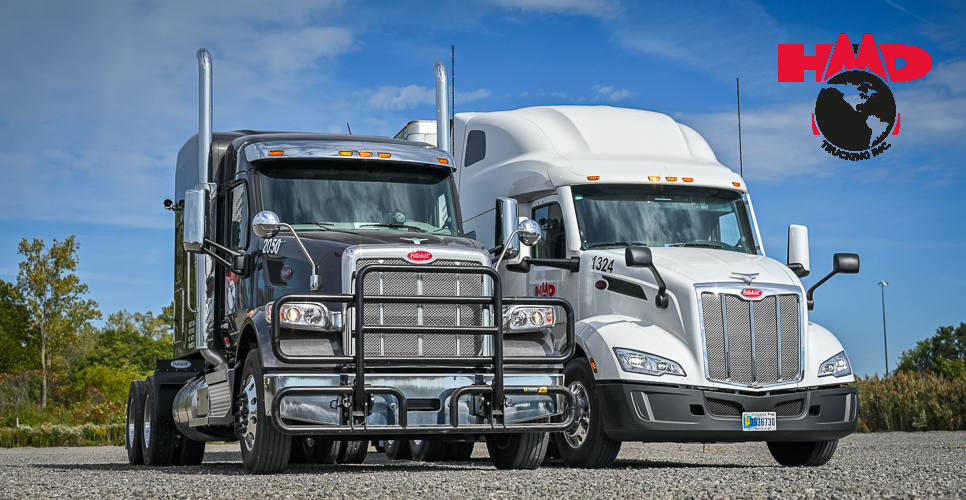
These jobs require a specially equipped OTR truck meaning one with a sleeper cab equipped with a bed, a comfortable mattress, a heater for cold weather, and shelves for personal items. Sleeper cabs can be packed lavishly with a TV, refrigerator, or a microwave oven. A power inverter is also an indispensable component. This is required for boosting the electrical power output, as the driver needs added juice to feed more electronic devices. Besides that, the truck is not only a home for the driver but an office as well. That is why OTR drivers need more equipment and solutions for any situations that could happen on the road.
During long hauls, truck drivers need to stop to sleep. Therefore, we advise you to read our article on the best truck stops of America.
Difference between OTR, Regional, and Local
Now that you know the OTR definition in trucking, let’s take a look at the two other areas — regional and local driving. As you’ve probably already guessed, the main difference is the number of miles covered during one trip.
Usually, regional CDL jobs can be out on the road for several days and enjoy a regular weekend like other workers. They operate exclusively within the borders of a state, region, or province and cover up to 1,000 miles per trip. Read our article to learn more about difference between otr and regional trucking.
Local drivers are fortunate to spend their evening at home, as their typical working day lasts 8–10 hours and allows them to travel within 200 miles. This activity can be challenging: the drivers have to be smart at needling through narrow streets and loading docks, and know the city of operation perfectly to deliver the goods on time and safely.

Regardless of the number of miles on the odometer, each driver does the work of utmost significance. As Chris Spear, President and CEO of American Trucking Associations, once said in his blog on trucking.org, “Truckers are the true meaning of essential”. The reason behind these words is obvious: truck drivers “keep our supply chain rolling and the economy strong”.
Keeping these words in mind, you can choose the occupation that is best suited to you. In any case, it will be a job vital to humanity. Today, though, we are discussing OTR truck driving and we should touch on the topic of its advantages.
Advantages of Over-the-Road Trucking
Every occupation has its ups and downs. Even though unhealthy food or long periods away from home may be treated as real challenges of OTR trucking, we believe that the majority of them depend more on your personal preferences and lifestyle. So let’s take a deeper look at its advantages to understand why over-the-road trucking is still the most attractive type of driving.
Higher Salary in Over-the-Road Trucking
There are several reasons for the higher salary rates. Long-haul driving is considered the most complicated, dangerous, and skill-demanding activity. The driver needs to know the logistics and be prepared for any possible situation. Moreover, they should be able to assess, troubleshoot and at times, repair the truck in case something happens on the road far from a service station.
Due to these difficulties, the number of highly professional truckers capable of OTR driving and having adequate experience is quite small. The demand for their services is, as a result, higher. According to Zippia.com, the average long-haul truck driver’s salary is $59,758 per year, while ZipRecruiter.com states it's approximately $55,831. However, this figure varies based on region and experience level, with some company drivers earning up to $106,000 annually. As of September 2025, ZipRecruiter.com reports that the most active job market for truck drivers is in Alaska, where the average salary is $86,147. Other top-paying states include Kentucky, Oklahoma, and Michigan, each offering over $66,000 per year. For additional information on long haul truck driver salary, please follow the link to another article that provides a more comprehensive overview.
Lots of Trucking Jobs
High demand implies a significant number of available OTR truck driving jobs. It means that wherever you live, you’ll be able to find a decent job offer. For example, today, there are more than 121,000 positions listed on Indeed.com, the top site for job-seekers. Employers may offer different pay, benefits, perks, truck condition, and equipment, but the OTR driver always has a vast list of jobs to choose from. Besides, there is an option to work in double teams. In this case, you’ll always have a reliable buddy to travel with and work in shifts.
Сhance to See the Whole Country
Another benefit is the opportunity to travel while doing long-haul driving. As drivers often go from coast to coast, they get to see many tourist attractions and enjoy spectacular views en route. Sometimes, they will even cross the border, visiting Mexico or Canada. It sounds like a dream job where you get paid for an adventurous life full of breathtaking scenery, new acquaintances, and exciting food.
Flexibility of Over-the-Road Trucking
To some drivers, flexibility and independence seem to be some of the key benefits. The boss is far away and doesn’t check your every step. Trip planning is also vested in the driver: it’s possible to set your schedule and make most decisions without consulting anyone. Still, there are requirements under dispatch and regulations for hours of service that can’t exceed 11 uninterrupted hours in a 14-hours window (at that a 30 minute break has to be taken after 8 hours of uninterrupted driving). Despite that, there is a high degree of liberty, making it possible to enjoy the romance of the big road. The OTR driver is not chained to loading docks. There are other people hired for this role. Only the big road ahead and long hours of driving and sightseeing.
Interested in OTR trucking?
To wrap up, OTR truck driving can be called a challenging but rewarding and reliable job that will be in high demand even amid crises. It’s suited to those who want to make a valuable contribution to society's well-being. And here, at HMD, you can be part of the OTR driving community, as we want to increase the number of passionate professionals at our company. You’ll enjoy comfortable trucks, impressive routes, and a long list of perks from medical coverage to various bonuses. Don’t hesitate to apply: