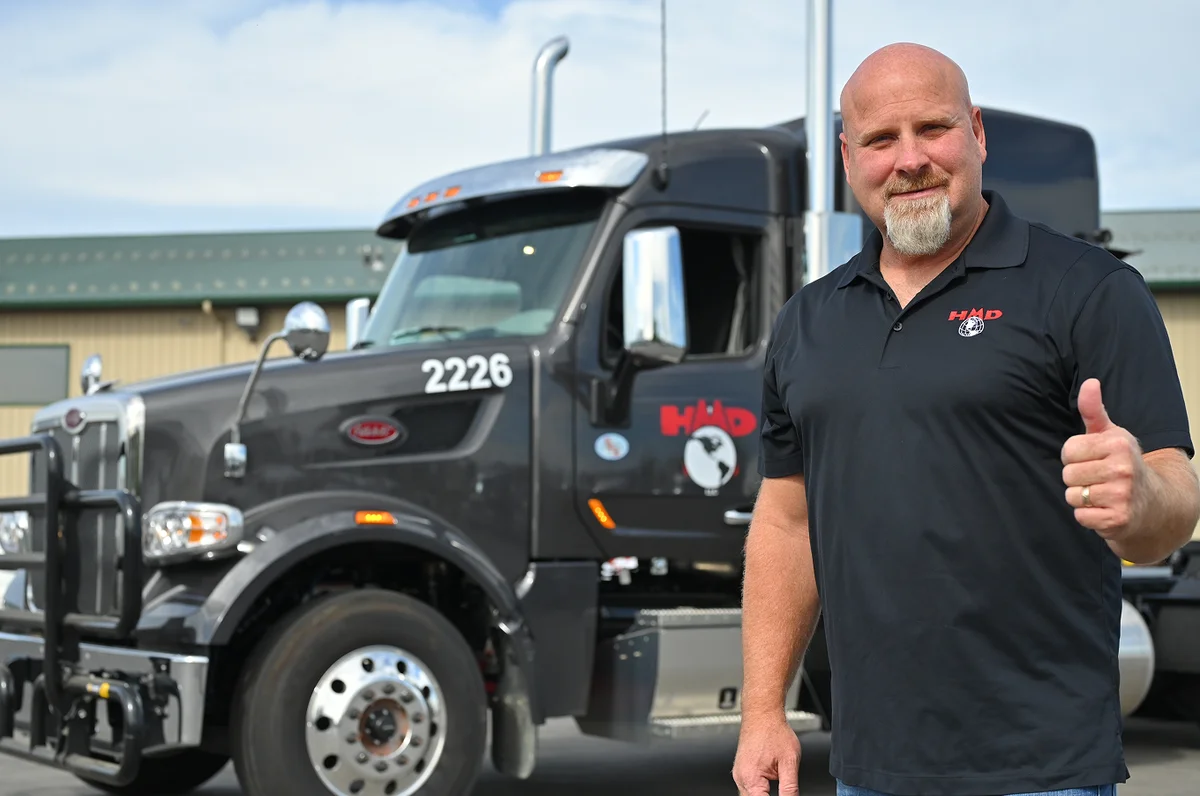
Truck Driver Shortage Solutions for 2026: Why Churn Must End
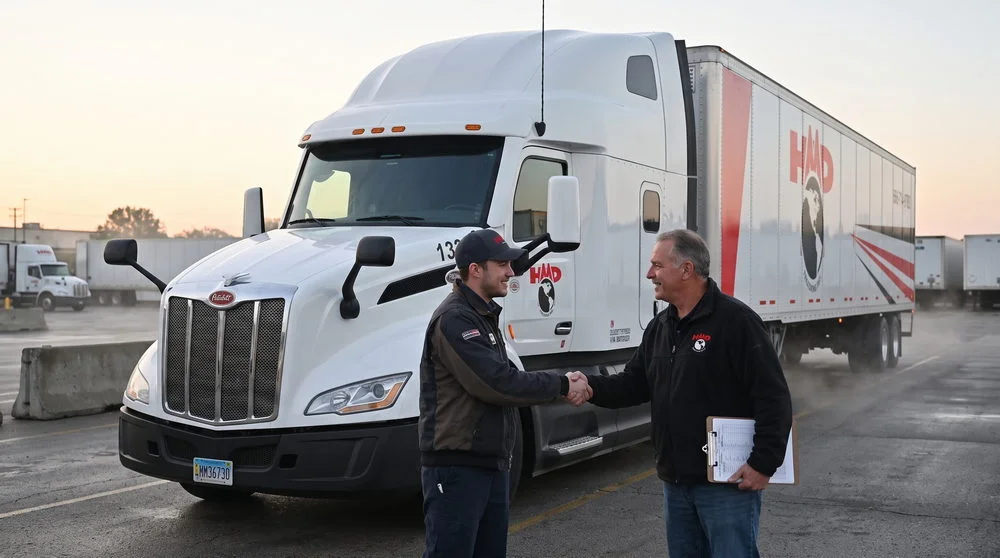
by Michael Mahler — HMD Trucking
Should you drive into a truck stop off Interstate 80 on any given night, you will come across the same story being told from one booth to another. The one where the drivers share tales of miles gone, the dispatchers who look at them as no more than a dot on the screen, and the huge fleets that offer everything but deliver empty promises.
For decades, the biggest carrier boardrooms in this country operated on a single, pessimistic premise: drivers were replaceable. If a driver got fed up with low miles, broken equipment, or unpaid dock time and walked away, recruiters would simply sign up another newly minted graduate from a CDL mill. Fleets accepted annual turnover numbers pushing 80% to 95% as just the normal cost of doing business. Whenever freight volumes spiked and seats stayed empty, industry executives ran straight to the television cameras to lament a perpetual driver shortage in the trucking industry.
Now, we have arrived in 2026, and that revolving door has ground to a halt.
The era of cheap, disposable driver recruiting is officially over. Between unprecedented federal crackdowns on rogue CDL schools, razor-thin operating margins, and a long overdue legal reckoning for predatory carrier debt contracts, the traditional churn and burn playbook has failed. At HMD Trucking, operating out of the Chicago area, we have watched this shift unfold from the front seat. We believe the only way forward is to build a culture of genuine respect, top-shelf equipment, and reliable compensation.
Let us take a candid look at the tectonic shifts shaping American trucking, why the old recruiting model collapsed, and where genuine truck driver shortage solutions must come from today.
The 2026 Regulatory Crackdown: The End of the CDL Mills
To understand why the old recruiting pipeline is drying up, you have to look at what has been happening in Washington and across state driver licensing agencies.
Back in February 2022, the Federal Motor Carrier Safety Administration rolled out the Entry-Level Driver Training rule under 49 CFR Part 380. The idea was noble enough: create a federal Training Provider Registry where schools had to verify that they taught proper classroom theory and real behind-the-wheel skills before sending someone for a CDL skills test.
Yet for its first few years, the registry operated largely on an honor system. Rogue operators realized they could self-certify on a web portal without anyone immediately checking their lots or auditing their classrooms. Almost overnight, the registry exploded to roughly 16,000 listed entities. Many were legitimate community colleges and respected carrier academies. But hundreds were bare-bones diploma mills churning out CDLs after two days of parking lot coasting and zero meaningful highway training.
That administrative free pass ended abruptly.
Coordinated sweeps between the Department of Transportation, Homeland Security Investigations, and the Department of Justice targeted non-compliant training outfits nationwide. Federal regulators issued emergency orders removing more than 110 training providers directly from the Training Provider Registry, while issuing notices of proposed removal to more than 160 others.
When federal investigators fanned out across 40 states, what they found was alarming:
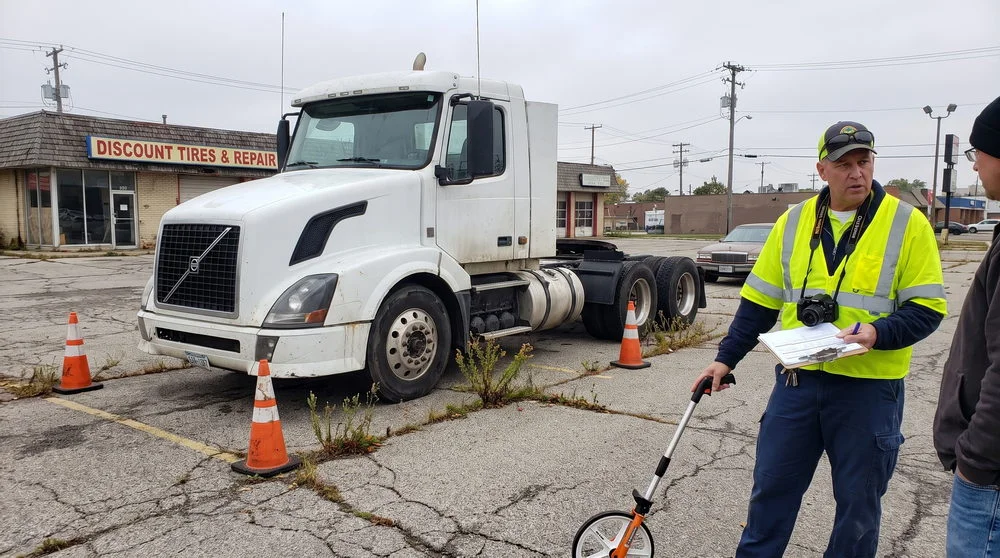
Backing ranges that were commercial parking lots too small to conduct a straight-line backing maneuver, let alone a 90-degree alley dock.
Instructors teaching students while lacking required credentials and, in some cases, operating on suspended commercial licenses.
Complete absence of training logs, test scores, or behind-the-wheel evaluation records.
In one egregious case, an outfit claimed its classroom was located in a school bus strapped to the back of a flatbed trailer.
The other alarming finding was that those drivers who had been certified by 160 providers and were supposed to have been revoked caused 239 commercial vehicle fatalities. The roadside authorities also started issuing “out-of-service orders” based on the lack of English Language Proficiency per §391.11(b)(2) 49 CFR, which resulted in over 28,000 drivers being put out of service and led to finding out the certification violation source – the school that had certified those drivers. Over 30,000 invalid CDLs awarded to unqualified individuals were revoked.
What does it mean to you out on the roads? There is no endless supply of drivers available immediately. The fleets relying on getting any cheap and unvetted drivers cannot do it anymore. If you are a professional driver, this development is great news to you because it means making our roads safe for all of us. But to those carriers that remain in the past, this development creates a real choke point in obtaining enough truck drivers.
The Real Cost of Driver Turnover
For decades, fleet accountants looked at recruitment advertising costs as a necessary evil. If spending $3,000 on digital ads and bonuses brought in a driver who lasted six months, they called it a win.
That math was always shortsighted, but in 2026, it is outright suicidal.
Let us look at the real economic benchmarks compiled by the American Transportation Research Institute. The average marginal cost to operate a Class 8 combination rig reached a record $2.336 per mile. Driver pay and benefits alone crossed into historical territory at $1.028 per mile ($0.818 in direct wages and $0.210 in benefits). Equipment lease payments rose to $0.404 per mile, maintenance climbed to $0.215 per mile, and commercial liability insurance surged another 6.4% early this year, averaging $0.106 per mile across the industry.
With overall truckload operating margins scraping by at an austere 0.4%, carriers have zero margin for error.
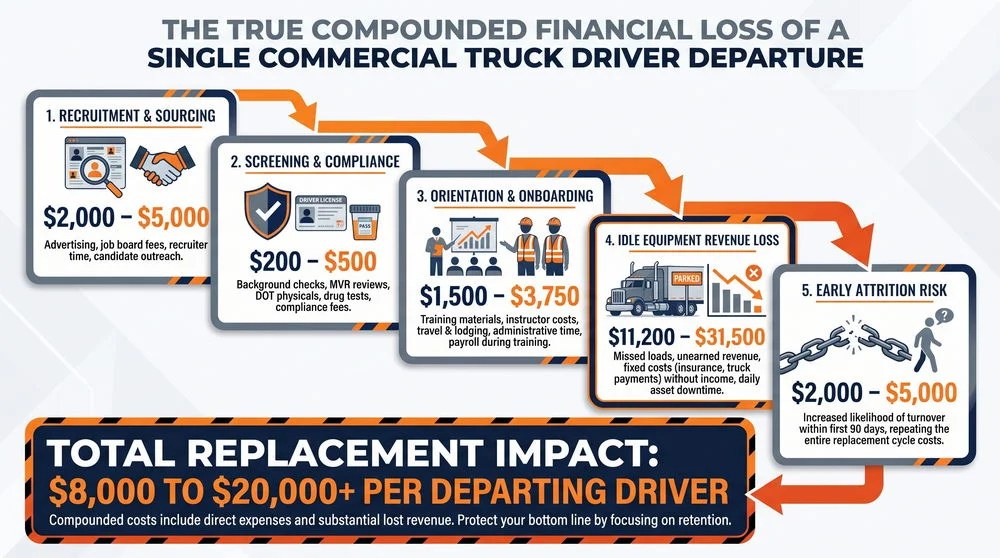
When a driver walks away, the real replacement cost is not just the price of a job board ad. It is a compounding financial drain:
Cost Category | Typical Industry Expense per Event | Why It Drains Fleet Profitability |
|---|---|---|
Recruitment & Sourcing | $2,000 to $5,000 | Job boards, social media leads, recruiter commissions, and advertising overhead. |
Screening & Compliance | $200 to $500 | PSP reports, MVRs, Clearinghouse queries, physicals, and drug screenings. |
Orientation & Onboarding | $1,500 to $3,750 | Travel, lodging, classroom materials, and daily orientation pay stipends. |
Idle Equipment Revenue Loss | $11,200 to $31,500 | Fixed truck debt and insurance ticking while the tractor sits unseated for 2 to 4 weeks. |
Early Attrition Risk | $2,000 to $5,000 | Unvested sign-on bonus loss, cargo claims, and high incident risk during the first 90 days. |
Total Replacement Impact | $8,000 to $20,000+ | Erases the annual net profit of nearly a dozen fully utilized, seated tractors. |
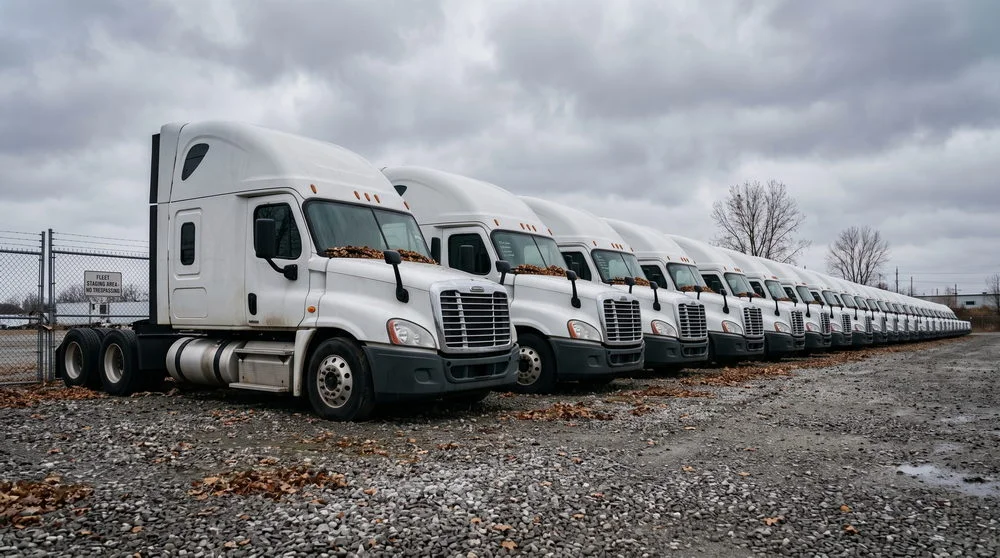
Notice the unseated equipment line. Every single day a modern tractor sits parked against the fence without a driver behind the wheel; the company forfeits between $800 and $1,500 in revenue. An empty truck does not pause its payment. It does not stop accruing insurance premiums. It just bleeds cash.
Consider what happens when a 100-truck fleet suffers from an 85% annual turnover rate – a common reality across big truckload carriers. That fleet must hire 85 replacement drivers every twelve months simply to stay flat. At an average all-in turnover cost of $12,000 per departure, that carrier burns over $1,000,000 every single year just spinning its wheels.
This is the hidden tragedy of the national shortage of CDL drivers. The industry does not lack human beings with commercial licenses. What it has lacked is the operational discipline to keep those drivers seated, respected, and earning an honest living.
Real Truck Driver Shortage Solutions: Why High Turnover Fails
If we want to fix capacity, we must stop pretending that marketing tricks and debt contracts are viable business strategies. Meaningful truck driver shortage solutions demand an overhaul of how carriers compensate, train, and support professional drivers.
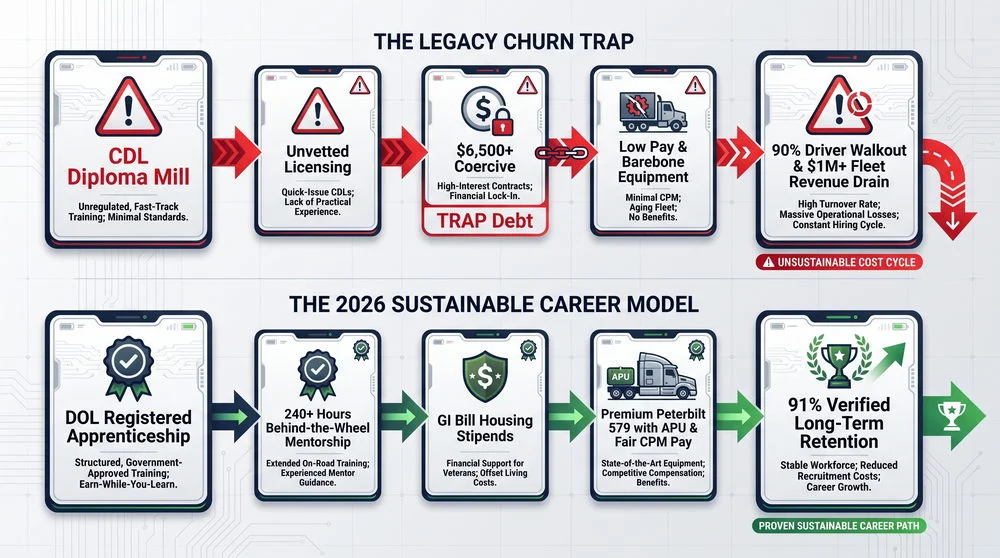
For years, the mega-carrier solution to retention was simple: trap the driver. They used Training Repayment Agreement Provisions, or TRAPs. A driver received standard entry-level training but was forced to sign a promissory note for $6,500 to $9,000. If they quit before twelve or eighteen months, the carrier went after them for the full balance, turned the debt over to collections, or withheld their final paycheck.
Investigations revealed that while carriers charged students $6,500 for training debt, the carrier's actual cost paid to the school was often as low as $1,400 to $2,500. Worse, only 20% of the trainees who entered those programs ever made it through their contract term. It was not a training model; it was a debt collection trap designed to keep wages artificially depressed.
Now, consumer watchdogs and state laws are tearing TRAPs down. The Consumer Financial Protection Bureau and the Federal Trade Commission have flagged these coercive agreements as anti-competitive debt schemes. States like Colorado passed legislation treating abusive training repayment terms as consumer credit violations with treble damages against predatory carriers.
If a carrier wants drivers to stick around in 2026, it cannot hold them hostage with legal threats. It has to give them a reason to stay.
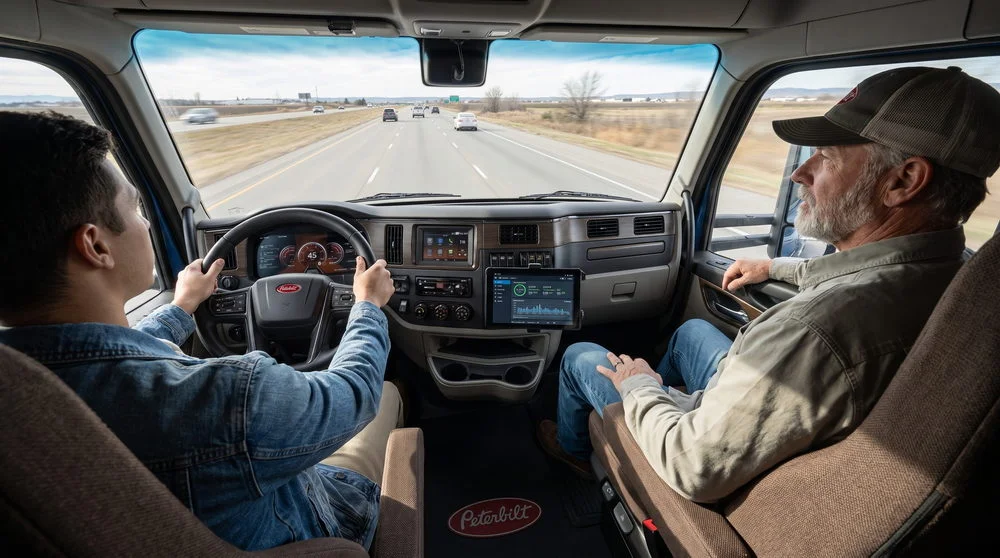
That is why leading carriers are pivoting toward Department of Labor Registered Apprenticeship Programs and structured finishing academies. Unlike transactional CDL mills, a Registered Apprenticeship combines classroom theory with 240 or more hours of verified behind-the-wheel mentorship. During the initial finishing phase, trainees receive dedicated coaching from veteran mentors in the jump seat, not forced team driving, where a rookie is left alone on an icy bridge at 3:00 AM.
The results speak for themselves: while conventional large fleet recruits quit at rates near 90%, Registered Apprenticeship programs boast an astonishing 91% retention rate. Furthermore, military veterans in certified apprenticeships can draw tax-free monthly housing stipends through their GI Bill benefits – often up to $1,700 per month on top of their carrier wages. That kind of financial breathing room helps new drivers build long, safe, and lucrative careers without drowning in personal debt.
This is how the industry solves the driver shortage in the trucking industry: by treating professional driving as a skilled trade rather than a low-wage temp job.
The Modern Carrier Moat: How HMD Trucking Invests in the Person Behind the Wheel
At HMD Trucking, our entire operational philosophy has always been built on a simple premise: give professional drivers the respect, equipment, and financial stability they deserve, and they will run circles around the competition. We do not rely on smoke and mirrors. We build our competitive advantage through honest operations.
Premium Equipment That Treats Drivers Like Professionals
Every driver knows that your truck is your home, your office, and your lifeline on the road. Running worn-out tractors with rattling cabs, broken air conditioners, and underpowered engines is an insult to the people moving America's freight.
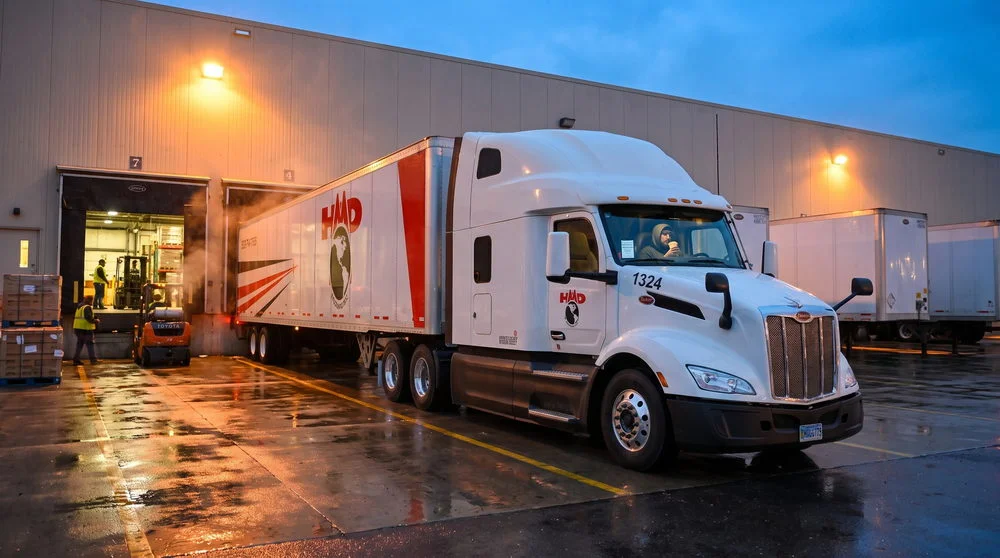
That is why we make substantial investments in our equipment. HMD uses relatively new Peterbilt 579 tractors made from 2023 to 2027. They are not stripped-down fleet tractors; they are designed for professional work and the comfort of a driver.
Each company truck is equipped with:
The built-in Auxiliary Power Unit (APU) to maintain cabin temperature in freezing winters of the Midwest and hot summer days without wasting time idling the main engine.
High-power pure sine-wave power inverters for running household electronics, microwaves, and medical devices comfortably.
Refrigerators installed directly in the tractor to store fresh food and be able to eat healthy food instead of expensive food from a truck stop.
Speed governor set at 73 mph to be able to make safe overtaking moves and to manage the schedule effectively.
Getting into an HMD Peterbilt makes all the difference. The truck is quiet, powerful, and reliable. Such an approach to the equipment reduces unplanned repairs and allows drivers to spend their time making money instead of being idle in the repair shop.

Transparent Pay and Real Accessorial Protection
We have all seen recruitment flyers shouting about making 85 cents per mile. But ask the driver running that lane how many miles they actually saw last week, or what happened when they spent six hours backed up to a grocery distribution center dock. In most cases, the real answer is frustration.
At HMD Trucking, we believe transparent pay is the cornerstone of trust.
Our solo OTR drivers for our dry van get paid $65 to $75 per mile. This is an excellent $65 CPM base pay with achievable $10 CPM bonuses for safety and productivity. The result is gross weekly earnings ranging from $1,350 to $2,250. Our regional dry vans offer a guaranteed $70 CPM rate weekly home time at $1,260 to $1,650 per week.
Most importantly, we back our drivers when shippers waste their time. We pay detention of $25 per hour after the two-hour mark, full $175 daily layover pay, and dedicated breakdown compensation. We do not let a delayed dock door become our driver's financial loss.
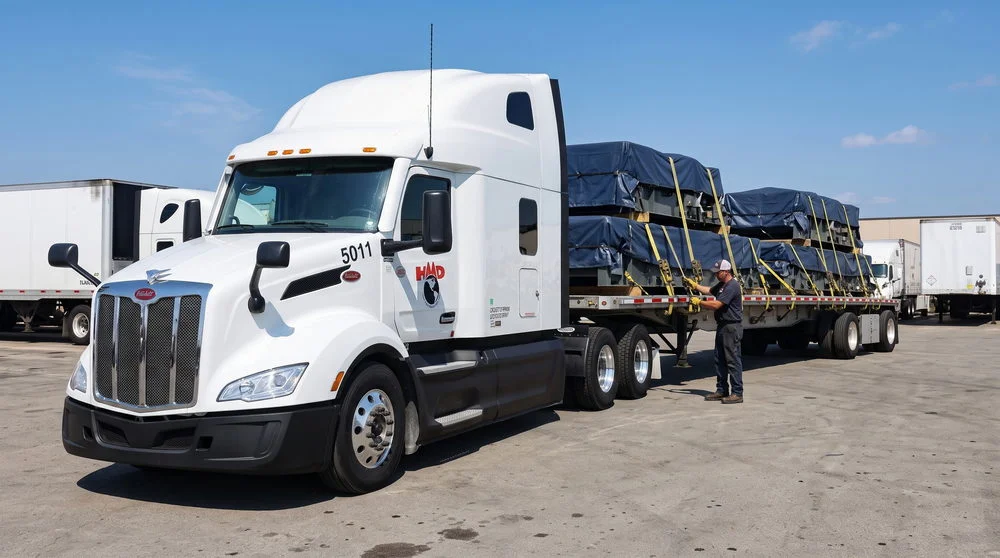
For drivers holding specialized credentials, the earnings multiply. Adding a HazMat endorsement or pulling doubles pays an automatic +2 CPM premium across all miles driven, with specialized solo drivers earning up to 77 CPM and team drivers splitting up to 84 CPM alongside a $10,000 sign-on bonus. Our flatbed division offers 70 CPM base pay on all dispatched miles plus $30 load tarp and securement pay.
We earn your trust load by load, week by week.
The Midwestern Advantage: Route Density and Dispatch Support
Sitting in the center of the industrial Midwest of Chicago, Illinois, HMD is located right at the center of North American freight traffic. How does this benefit you? Simply put, route density. Unlike other companies from far-off places who spend countless hours of their time trying to find freight to haul, our trucks are running in the densest areas of manufacture and consumption on the continent.
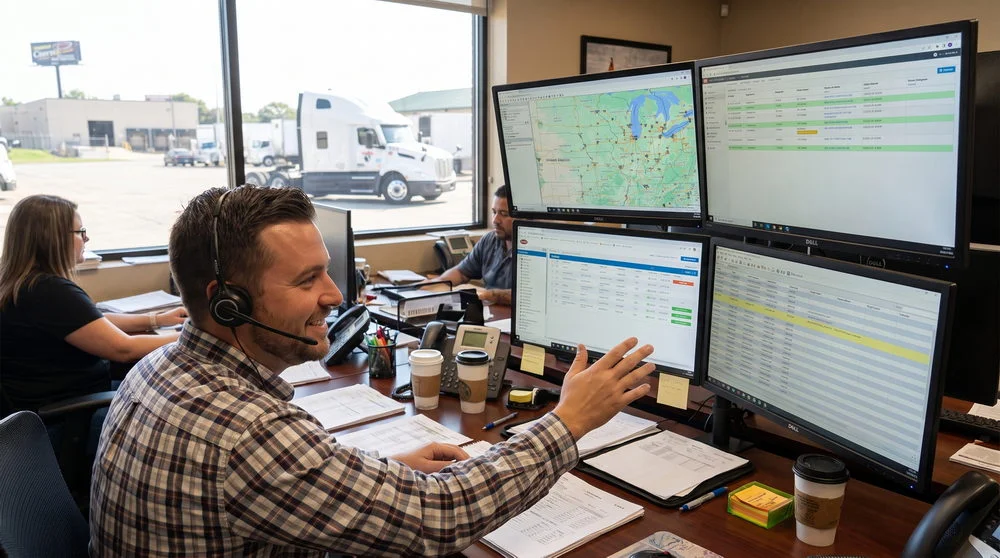
More than that, our dispatch team respects the hours-of-service rules and the human beings operating the trucks. You are not a truck number barking into an automated phone tree. You work with seasoned professionals who know the lanes, understand weather challenges, and work with you to make sure your home time happens when it was promised.
This is how we respond to the national shortage of CDL drivers. We do not complain about driver pipelines. We build a fleet environment where professional drivers want to stay for the long haul.
Key Takeaways for Professional Drivers
The trucking world of 2026 is experiencing significant changes, which have an impact on your profession:
Paper certifications don't ensure safety anymore: The audit carried out by FMCSA regarding substandard CDL schools is proof that having a CDL doesn't mean you are competent enough to work. The carrier needs to check your skills to guarantee your safety and protect themselves from liability.
High churn strategy becomes financially unsustainable: With costs at $2.336 per mile, carriers won't be able to maintain 90% turnover anymore. Each parked tractor means over $1,000 a day in lost revenue. Retaining fleets is now the way to survival for any corporation.
Predatory debt contracts are dying: The federal ban on TRAPs and coercive training notes, along with state consumer lawsuits, put an end to the predatory debt contracts era. Real professional development becomes available in the form of DOL-registered apprenticeships, structured finishing programs, and the VA GI Bill.
Your total pay means more than the headline pay rate: You shouldn't evaluate a carrier by its CPM only. The whole deal should include things like realistic safety bonuses, guaranteed detention pay after two hours, a layover guarantee, and steady weekly dispatched miles.
Better equipment means better earnings: New Peterbilt tractors equipped with APUs, power inverters, and a fridge in the cab not only provide comfort but also help you to get good sleep, save on meals, and avoid costly breakdown downtimes.
The demand for experienced drivers stays high: While the national demand for truck drivers remains high, the carriers are becoming picky about whom they hire. Those who possess clean MVRs, specialized endorsements, and real driving experience are on top now.
The Road Ahead: Drive With HMD
A lot is going to change soon in the trucking world, and it's definitely long overdue! For many years, drivers have experienced an industry that prioritized quantity over quality and speedy recruiting over true relationships. But now, with increased licensing regulation and demands for better treatment of employees, the future belongs to the carriers who prioritize their drivers.
We are proud to be the ones who initiate this change in Chicago! We've created a company in which you are backed by the finest Peterbilt equipment on the highway, supported by dispatchers who know your name, and rewarded with transparent, predictable pay that honors your labor every single mile!
And if you are tired of the revolving door, empty promises, and worn-out equipment, it is time to find a carrier you can truly call home. Check out our open CDL-A driving opportunities at HMD Trucking today, explore our modern Peterbilt fleet, and see firsthand what it feels like to drive for a carrier that has your back across every mile.