What is a Commercial Driver Record: Understanding MVR Report and CDL Record
by Michael Mahler — HMD Trucking
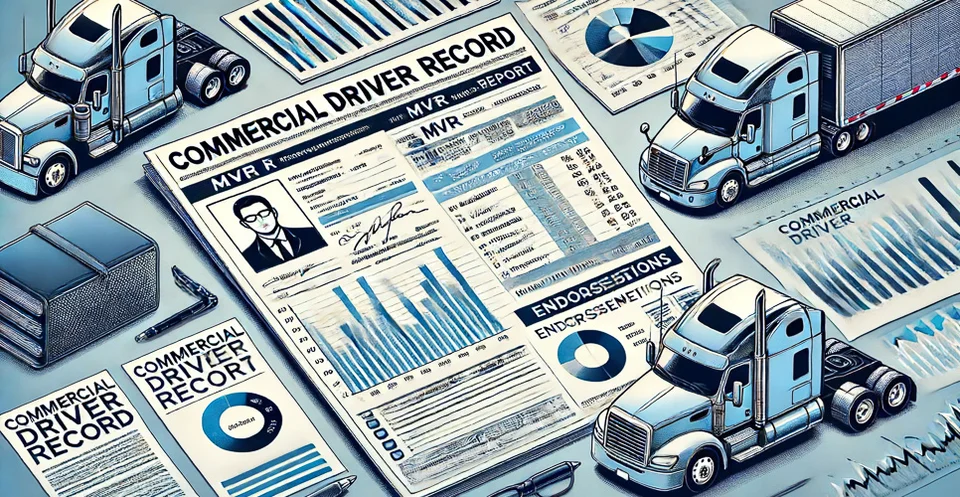
The commercial driver record is invaluable for a professional truck driver. Summarizing the driving history of the commercial driver, this document is essential concerning its relevance to commercial drivers in the trucking industry. There is a need to clearly understand what the commercial driver record means for CDL holders, its components, and how important it is. Understanding its peculiarities aids in effective compliance with requirements and standards.
What is a Commercial Driver Record?
A commercial driver record, often referred to as an MVR, is a summary portraying the driving history of a commercial driver. Such information will typically include license status, traffic violation information, records of any accidents, or other driving-related incidents. The Department of Motor Vehicles holds the record and may be accessed by an employer, an insurance company, or a regulatory body.
What is an Acceptable Driving Record for CDL?
A good driving record is usually one in which the CDL holder has few violations, no major offenses, such as driving under the influence (DUI), and no safety compliance issues. Both employers and regulatory agencies use it as a means of judging whether a driver is acceptable to pilot commercial vehicles. Although some of the specifics may differ from one employer or jurisdiction to another, here are some of the general:
- No major traffic violations: Such as DUI, reckless driving, or leaving the scene of an accident.
- Fewer minor infractions: Few or no records showing actions that are unauthorized speeding, improper lane changes, or other minor violations.
- Accident history: Few or no at-fault accidents.
- Regulation compliance: Abides by regulations that are specific to CDL, which include service hours and maintenance of the vehicle.
What's Included in a CDL Driving Record
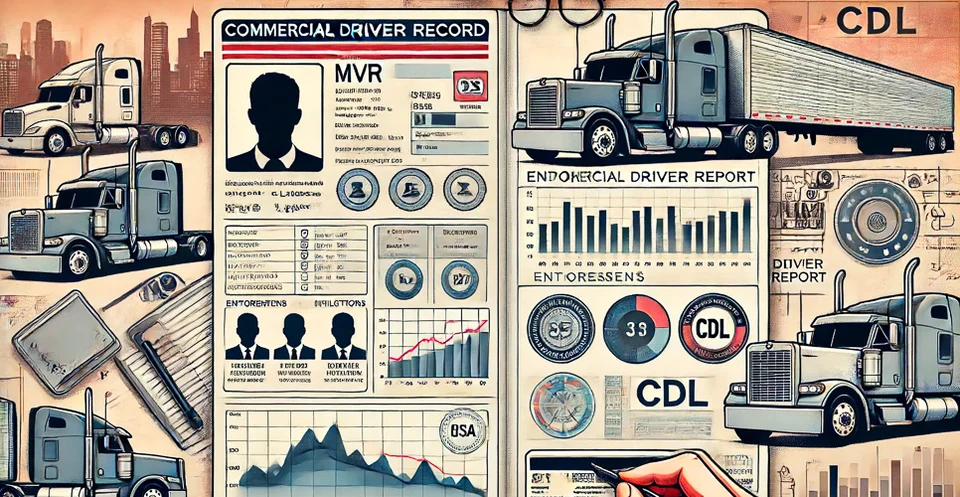
There are several critical elements in the CDL record, all of which offer a view of the driver's professional past.
Assessing the safety profile of a professional driver requires consideration of two main sources of federal and state reporting information.
- State Motor Vehicle Record (MVR): The MVR is obtained from the state licensing authority to verify your CDL classification (valid, suspended, or downgraded), MEC self-certification, endorsement (Tanker, HazMat, Doubles/Triples), and moving violations from all 50 states, documented through the Commercial Driver’s License Information System (CDLIS).
- FMCSA Pre-Employment Screening Program (PSP): The PSP report is obtained directly from the Department of Transportation to provide the carrier with five years of DOT-reportable crashes and three years of roadside inspection history. The report tracks every Level I through Level VI inspection performed on drivers, including OOS findings for the driver and vehicle.
Besides the driving record maintained by each state, the hiring process of carriers includes private employment reports and government clearinghouse screens:
- HireRight DAC Report: It is an employment credit report customized for the commercial transportation industry. It tracks ten years of employment, kind of equipment handled, reason for separation, eligibility for rehire, and any non-DOT preventable yard and dock violations as submitted by past trucking employers.
- FMCSA Drug & Alcohol Clearinghouse: Motor carriers are mandated by federal rules to run a pre-employment inquiry prior to assigning any CDL driver for any duty. This database contains information on all unresolved DOT violations of drugs and alcohol, refusal to take the tests, and RTD clearance status. Any open violation bars the driver from driving commercial motor vehicles until the requirements are fulfilled.
Reasons Why You Need a CDL Truck Driver Record
A comprehensive and accurate CDL truck driver record is crucial for several reasons:
- Employment: Most employers rely on the record to award drivers with hire-ability. A clean and reliable record can enhance a driver's opportunities significantly to the job and career progressions.
- Insurance: Insurers use it to assess risk and determine premiums. Clean CDL record drivers often tend to have lower rates from insurance companies, given that they pose a low-risk profile.
- Regulated Compliance: Ensures that drivers follow stipulated rules and regulations as stated by the Federal and State governments. Without such compliance, one might consider heavy fines, penalties, and consequences for potentially losing driving privilege.
- For professional reputation: In the transportation industry, a good driving record brings excellent respect in the eyes of clients and employers.
Importance of a Clean CDL Driving Record
A clean driving record is one of the most valuable assets of a CDL holder. It helps provide one with job opportunities, lowers insurance output, and keeps the CDL credentials always comfortably in good standing.
What is a “clean driving record”? A "clean driving record" typically refers to a driving history that does not include any significant violations or incidents. A clean record provides evidence of a professional and safe driver. Some benefits of having a clean record are as follows:
- Job security: Clean drivers will likely stay longer with the same employers.
- Career development: There are more chances of promotions and getting good job offers with a clean record.
- Savings on insurance: low premium on insurance policies for vehicles – be it personal or commercial.
- Legal protection: reduces the chance of litigation on driving-related offenses.
Keeping your commercial driving file clean requires active management and regulatory due diligence:
- Challenge Erroneous Inspection Violations via DataQ: Inspect your PSP report regularly. If a roadside inspector issues an incorrect vehicle or driver citation that is later dismissed in court, file an official Request for Data Review (RDR) through the FMCSA DataQ system to remove the violation points from your record.
- Traffic Ticket Defense in Court: Never send money by mail to take care of your business traffic violation. The payment of a traffic violation means a conviction on your MVR for state, with points being accumulated in the FMCSA Safety Measurement System (SMS) Unsafe Driving BASIC for a period of three years.
- Thorough Pre-Trip Vehicle Inspection: Identifying faulty air hose, faulty brake adjuster, or faulty clearance light in your pre-trip vehicle inspection is key to avoiding Out-of-Service (OOS) orders at the roadside inspection.
How CDL Legal Can Help
“CDL Legal” services provide drivers with resources and support to maintain a clean driving record. They offer consultation on compliance and safety programs. Services offered include:
- Legal representation: in traffic tickets and other legal issues.
- Consultation: On regulatory compliance and best practices.
- Dispute resolution: Assistance and advice to resolve stand-off differences with employers or regulatory bodies.
- Educational resources: Training materials and legal updates are both readily available to stay updated on what's going on in the sector.
Conclusion
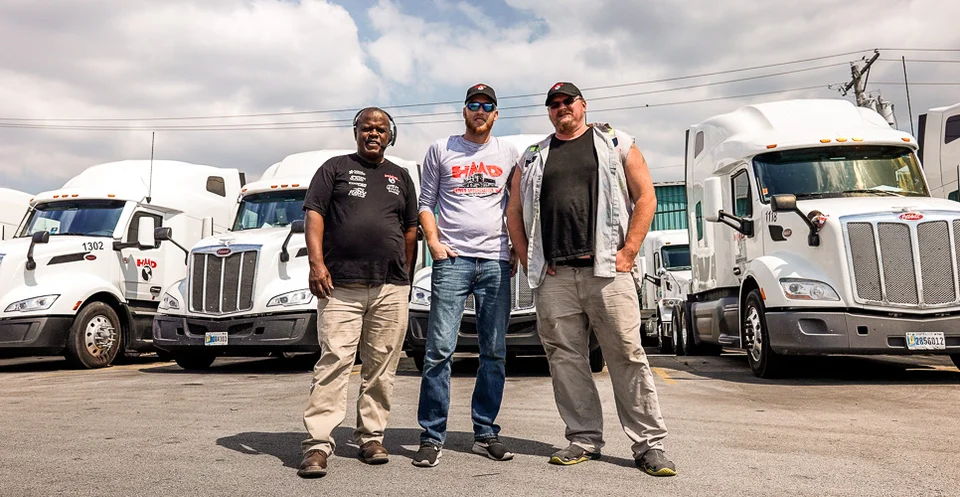
Your commercial driving record is your most valuable professional asset. Protecting your MVR and PSP history ensures long-term job security, lower personal insurance premiums, and access to top-paying carrier positions. At HMD Trucking, we reward safe, experienced drivers with premium mileage rates, generous production incentives, and modern company equipment:
- Regional Dry Van Solo: Earn a fixed 70 CPM ($1,260–$1,650 weekly gross) with guaranteed weekly home time and a $2,500 sign-on bonus.
- OTR Dry Van Solo: Earn 65 to 75 CPM ($1,350–$2,250 weekly gross) backed by achievable monthly safety and mileage bonuses plus a $2,500 sign-on bonus.
- OTR Flatbed Solo: Command 70 to 80 CPM ($1,505–$2,175 weekly gross) with load securement pay and a $5,000 sign-on bonus.
- OTR HazMat & Doubles Teams: Split up to 84 CPM ($3,200–$4,700 weekly gross split) with a $10,000 team sign-on bonus.
- Safety Bonuses & Equipment: Receive a $100 clean inspection bonus, $175 layover pay per 24 hours, and operate late-model 2023–2027 Peterbilt 579 tractors featuring spacious sleeper cabs and inverters. Drivers with at least six months of verifiable CDL-A experience can apply online today to join the HMD Trucking team.