Understanding Fentanyl and DOT Drug Test Requirements in 2026
by Michael Mahler — HMD Trucking
At HMD Trucking, we spend our days keeping freight moving across America’s heartland, watching the highways, and staying ahead of every major regulatory shift that hits our industry. Whether you are hauling out of our main terminal here in Chicago or running cross-country lanes, you know that keeping your commercial driver's license (CDL) clean and compliant is the bedrock of your career.
Lately, there has been a lot of chatter in breakrooms, loading docks, and fleet offices about the latest updates coming out of Washington. The Department of Transportation (DOT) is finalizing what stands to be the most significant update to mandatory drug screening in decades: adding fentanyl and its metabolite, norfentanyl, to the standard federal testing panel.
Why is this now? What does the lab science actually look like? What exactly will these new DOT rules for truck drivers mean for your day-to-day life behind the wheel?
As experienced carriers, we like to give our drivers direct answers, no fluff, no legal speak, and no panicking. In this full guide we will break down everything you need to know about the upcoming DOT drug test requirements, how Medical Review Officers (MROs) will manage test results, and what motor carriers must do to remain 100% compliant in 2026.
Why the DOT Is Updating Its Panel
To understand where the changes come from, we have to look at the broader legal framework in which federal transportation safety operates. 49 CFR Part 40 establishes the DOT as the federal authority that oversees drug and alcohol testing in the workplace for all sectors of transportation. But the DOT does not pull its drug testing panels out of thin air. Under the Omnibus Transportation Employee Testing Act of 1991 and the SUPPORT for Patients and Communities Act, the DOT is mandated to align its panels with scientific recommendations from the Department of Health and Human Services (HHS).
Once HHS has determined that in order to protect the public health and safety it is necessary to add or to modify a substance in the federal testing panel, the DOT must also proceed through the formal rulemaking process to do the same.
The Rulemaking Progression:
- HHS Mandatory Guidelines Update (July 2025): HHS officially placed fentanyl and norfentanyl on the federal workplace testing panel for employees of the federal government.
- DOT Notice of Proposed Rulemaking (September 2025): The DOT Office of the Secretary published in the Federal Register (Docket DOT-OST-2025-0049) a Notice of Proposed Rulemaking (NPRM) to add fentanyl to Title 49 CFR Part 40
- Public comment period ends (October 2025): The official period for public comment closed, giving the agency time to consider various opinions on the topic from carriers, labor organizations, and experts within the industry.
- Final Rule Implementation (2026): The rule is finalized by the DOT, making these requirements mandatory for all motor carriers and CDL holders regulated by the FMCSA.
These DOT drug regulations are meant to directly address the national opioid epidemic. Fentanyl and other synthetic opioids are believed to be responsible for more than 150 overdose deaths per day in the U.S., often spreading into other street drugs and counterfeit pills. On highways, split-second reactions make the difference between a safe voyage and a terrible highway pile-up; the DOT’s aim is to keep impaired drivers out of safety-sensitive positions.
What Is Changing in the Lab?
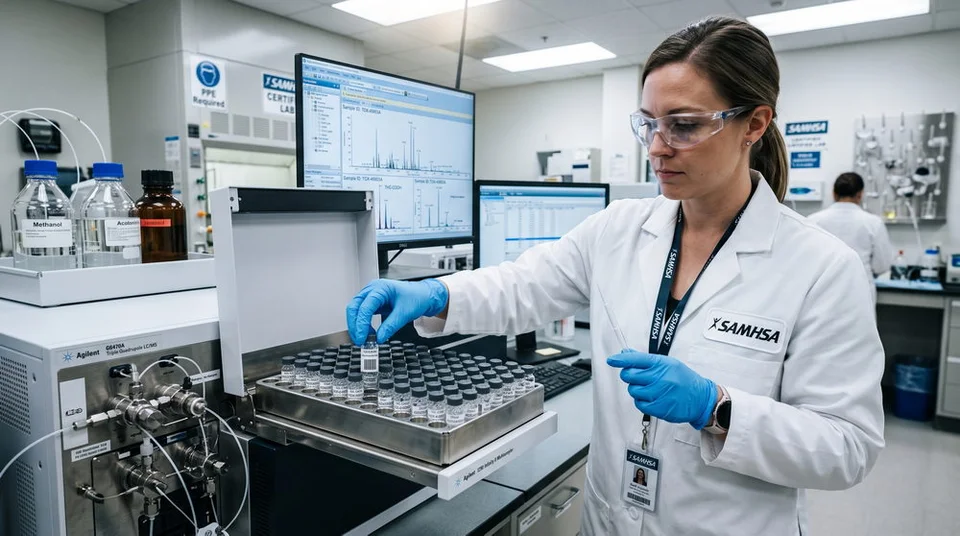
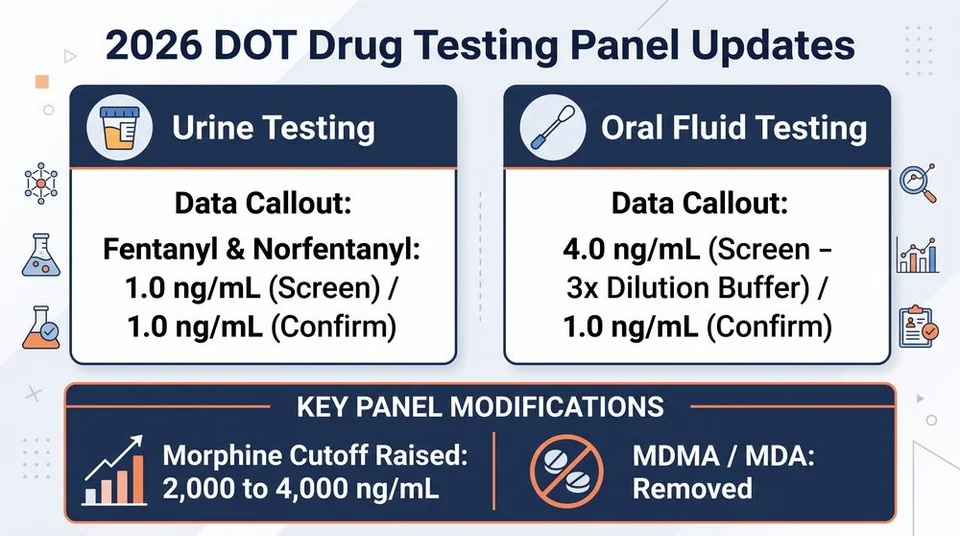
When you go to a collection site for a mandatory screen, your sample is processed by the lab based on specific numerical cutoffs in nanograms per milliliter (ng/mL). The 2026 panel updates provide new threshold values for standard urine testing and authorized oral fluid (saliva) testing.
Initial Screening vs. Confirmatory Cutoffs
The enhanced panel establishes strict detection levels aimed at identifying trace amounts of synthetic opioids while maintaining high analytical accuracy using liquid chromatography-tandem mass spectrometry (LC-MS/MS).
| Specimen Matrix | Test Analyte | Initial Screening Cutoff | Confirmatory Test Analyte | Confirmatory Cutoff | Panel Action |
| Urine | Fentanyl | 1.0 (ng/mL) |
Fentanyl Norfentanyl |
1.0 (ng/mL) 1.0 (ng/mL) |
Mandatory Addition |
| Oral Fluid | Fentanyl | 4.0 (ng/mL) | Fentanyl | 1.0 (ng/mL) | Mandatory Addition |
| Urine | Morphine | 2,000 (ng/mL) | Morphine | 4,000 (ng/mL) | Threshold Elevated |
| Urine & Oral Fluid | MDMA / MDA | Removed | MDMA / MDA | Removed | Panel Removal |
Key Laboratory Adjustments You Should Know
- Why Oral Fluid Screening is set at 4.0 (ng/mL): You may wonder why the initial oral fluid test screening threshold is set higher than urine. Oral fluid collection devices contain a preservative buffer solution that dilutes neat saliva at a factor of 3x. To accommodate the dilution of samples during collection, the initial screening cutoff is raised to 4.0 (ng/mL), while the confirmatory cutoff is maintained at the ultra-sensitive 1.0 ng/mL; this guarantees the accuracy of the immunoassays in certified laboratories.
- Raising the Morphine Threshold: For years, drivers have worried that eating a poppy seed bagel before a test could cause a positive result for morphine. To remove these annoying false positives from dietary sources, the DOT is raising the urine confirmation cutoff for morphine from 2,000 (ng/mL) to 4,000 ng/mL.
- Streamlining the panel: Hallucinogenic stimulants known as MDMA (Ecstasy) and MDA are being deleted from standard federal screens because of extremely low detection rates, allowing labs to focus their efforts on synthetic opioids.
- Suboxone / Buprenorphine Is NOT Being Added: There is a myth floating around that Suboxone is being added to the DOT panel. That’s false. Neither HHS nor the DOT has proposed to add buprenorphine to federal drug screens.
What the Data Shows: The Shocking Workplace Numbers
At HMD Trucking, we look at the numbers, not the CB radio rumors. If you contemplate the numbers behind drug tests in the workforce, the reasoning for these new DOT rules for truck drivers becomes clear.
According to the Quest Diagnostics Drug Testing Index (DTI), which compiles the results of more than eight million workplace drug tests a year, the rise in detection of synthetic opioids reveals an alarming trend in the entire American workforce.
- Pre-Employment Fentanyl Positivity Rate: 0.14%
- Random Testing Fentanyl Positivity Rate: 1.13%
- Statistical Divergence: Fentanyl positivity in random tests is 707% higher than in pre-employment screens.
The Pre-Employment vs. Random Testing Gap
Nationally in the U.S. workforce, positivity for fentanyl was much higher in unannounced random drug tests than in pre-employment screens. Random test positivity for fentanyl has been 400% higher than pre-employment screens over a five-year tracking period.
Why is this gap so large?
Because fentanyl clears the human body more quickly than other substances such as marijuana. Someone using synthetic opioids can stop for a day or two in advance of a scheduled pre-employment screen. Once hired, they can return to active use, betting on the odds that their name won't be drawn in a random pool. It is exactly this dangerous loophole that the DOT is trying to close by adding fentanyl to mandatory, unannounced random pools of testing.
Polysubstance Contamination: The Hidden Trap
Another important takeaway from the DTI data is that fentanyl use as a single drug is uncommon. Of those workforce samples that did test positive for fentanyl, about 60% were also positive for another drug:
- Marijuana Co-Positivity: 22% of tests positive for fentanyl also tested positive for marijuana metabolites (up from 10% in 2020).
- Amphetamine Co-Positivity: 16% were found to contain co-occurring amphetamines or prescription stimulants (increased from 11% in 2020).
For commercial drivers, this co-positivity has a terrifying corollary: illicit street drugs, counterfeit prescription pain pills, and black-market stimulants are often laced with lethal doses of fentanyl without the user ever knowing it. One street pill, swallowed to ease back pain or keep going, can end a truck driver’s life or career in an instant.
Among safety-sensitive employees under the DOT drug testing rules, the positive rates for post-accident (4.5%) and reasonable suspicion testing (12.6%) show that drug impairment on duty is still a top-tier safety risk.
The MRO Verification Process: Prescriptions vs. Illicit Use
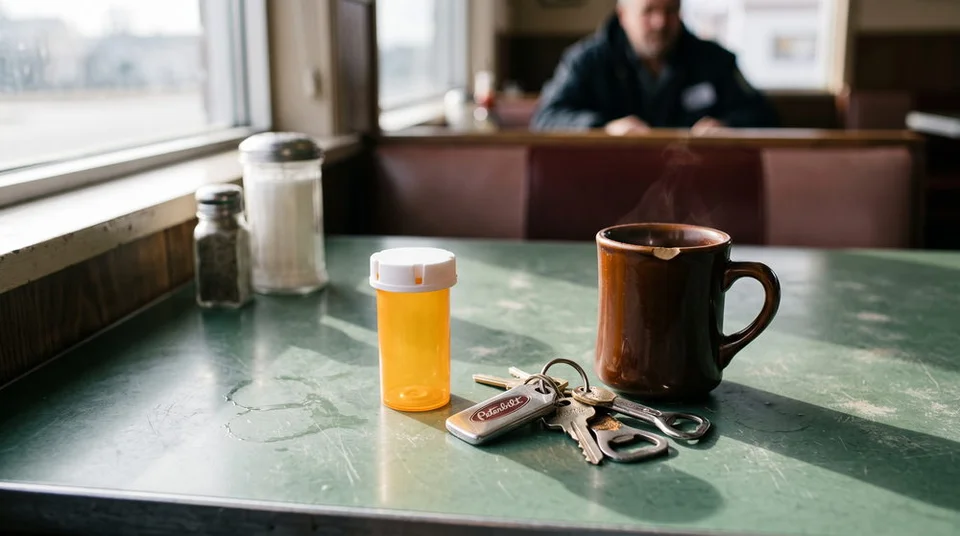
One of the biggest concerns drivers bring to our safety department at HMD Trucking is, "What if I were legally prescribed fentanyl after a surgery or severe injury?"
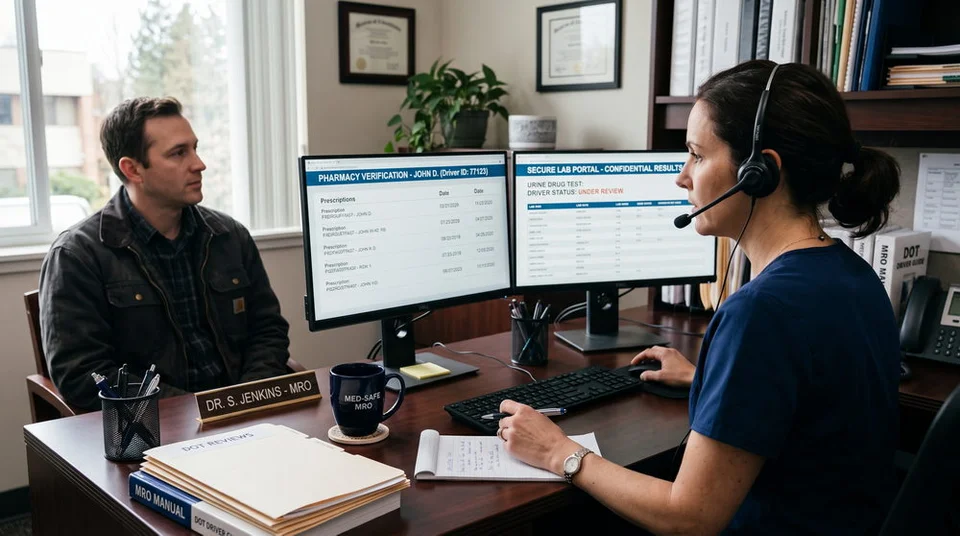
This is where the Medical Review Officer (MRO) is crucial in protecting your rights with updated DOT drug test procedures.
How Prescription Verification Works
Under federal law, fentanyl is a Schedule II controlled substance. There are real and legal medical uses for the substance; it can be applied in transdermal patches for severe, chronic pain relief or administered intravenously in surgical procedures in hospitals.
As there are legitimate medical applications for both substances, a laboratory confirmation of either fentanyl or norfentanyl does not mean an automatic DOT drug test failure.
The Step-by-Step Verification Protocol:
- Laboratory Confirmation: The certified laboratory identifies a concentration of fentanyl or norfentanyl that is above the regulatory thresholds.
- MRO Contact: The MRO privately and confidentially contacts the driver directly to conduct a verification interview prior to reporting any result to the employer.
- Prescription Submission: The driver provides documentation of a valid federal prescription written in their name by a licensed healthcare provider.
- Provider Verification: The MRO contacts the provider who prescribed the medication and the pharmacy from which it was dispensed.
- Negative Determination: Upon confirmation, the MRO declares the final result to the motor carrier as negative.
However, there are strict boundaries:
- No Expired or Borrowed Pills: If you took pain medication that was prescribed to your spouse or used leftover pills from a surgical procedure done three years ago, the MRO will pass the test as positive.
- No State-Level Medical Marijuana Exemptions: MROs under federal DOT regulations may not accept cards issued under state-level medical marijuana programs, nor any recommendations based on the use of marijuana under state law and not authorized by the FDA for medical use. These federal drug panels are strictly regulated by the Controlled Substances Act.
Elimination of Physical Examinations
Under older rules, if a driver tested positive for the natural opiates morphine or codeine, below certain thresholds, MROs were required to perform physical examinations to look for clinical signs of illicit intravenous drug use (such as needle marks). The new Part 40 allows for the complete removal of this requirement for morphine and codeine with levels below 15,000 (ng/mL) in urine. The MRO’s review of outcomes is done with reference to clinical records and pharmacy records objectively, avoiding superfluous wait times or subjective interpretations of physical checks.
Motor Carrier Compliance: What Fleets and Drivers Must Do Now
At HMD Trucking, we know that staying ahead of FMCSA enforcement keeps our fleet rolling smoothly and safeguards our drivers' safety scores. For motor carriers operating trucks over 26,001 pounds, carrying hazmat, or operating passenger vehicles, compliance with 49 CFR Part 382 and Part 40 is non-negotiable.
Here is the exact operational roadmap motor carriers must follow under the updated DOT drug regulations:
1. Wait for the Official DOT Effective Date
Employers are legally forbidden from testing drivers for fentanyl under DOT authority until the DOT Part 40 final rule officially takes effect. Using Federal Drug Testing Custody and Control Forms (CCF) for unapproved panel additions prior to the official launch date is a federal compliance violation.
2. Update Written Policy Statements (49 CFR § 382.601)
Every carrier must revise its written drug and alcohol policy to explicitly list fentanyl and norfentanyl among the tested substances across all mandatory testing circumstances (pre-employment, random, post-accident, reasonable suspicion, return-to-duty, and follow-up). Copies of this updated policy must be distributed to every CDL driver prior to testing.
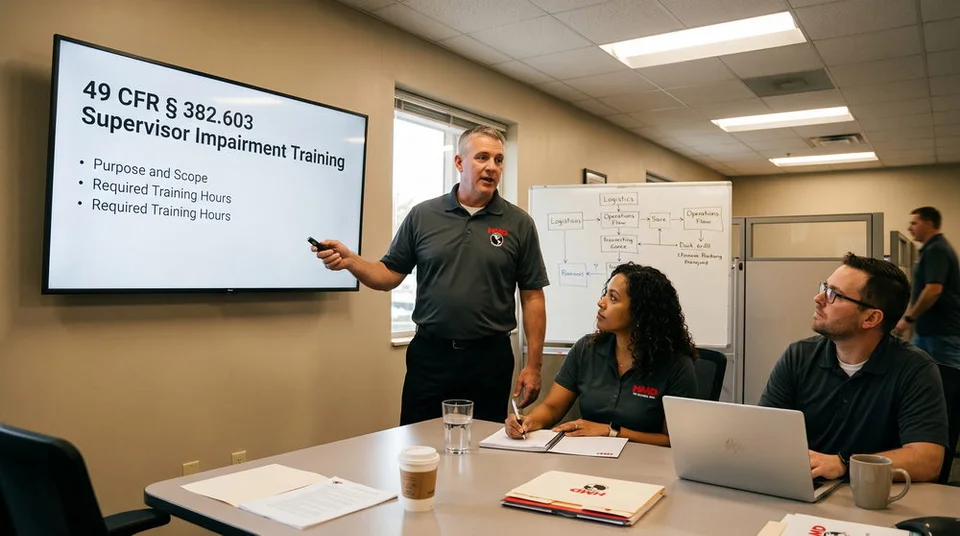
3. Required Supervisor Impairment Training (49 CFR § 382.603)
Fleet operators must ensure that all shift supervisors and dispatchers complete mandatory reasonable suspicion training:
- 60 minutes on physical, behavioral, speech, and performance indicators of alcohol misuse.
- 60 minutes on physical, behavioral, speech, and performance indicators of controlled substance impairment.
4. Clearinghouse II Reporting and License Downgrades
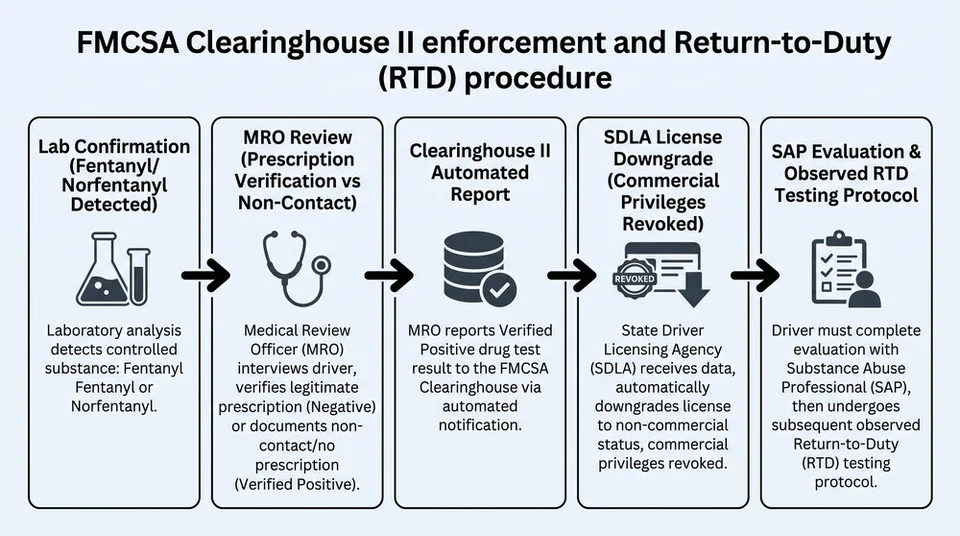
If a driver has a positive fentanyl test that is confirmed, or he/she refuses to take a required screen, the carrier and MRO shall report the violation electronically to the FMCSA Commercial Driver’s License Drug and Alcohol Clearinghouse.
Under the Clearinghouse II, the state driver licensing agencies (SDLAs) receive this information directly, and the individual’s commercial driving privileges are immediately downgraded and revoked.
The Enforcement and Return-to-Duty Pipeline:
- Reporting of Violation: Verified positive test or refusal is reported to the FMCSA Clearinghouse.
- Immediate Removal: Motor carrier immediately removes driver from any safety-sensitive functions.
- CDL Downgrade: Upon notification through the Clearinghouse, SDLA will downgrade commercial driving privileges.
- SAP Evaluation & RTD: The driver must complete the Substance Abuse Professional (SAP) evaluation, treatment plan, directly observed return to duty test, and follow-up testing schedule.
In order to be considered eligible for safety-sensitive duties, the driver must go through a rigorous return-to-duty (RTD) process involving a qualified SAP (Substance Abuse Professional). This includes clinical assessments, prescribed treatment programs, directly observed return to duty testing, and a minimum of six unannounced follow-up tests over the first twelve months back on the road.
Key Takeaways for Truck Drivers and Motor Carriers
- The Panel Is Expanding: Fentanyl and norfentanyl will be added as mandatory analytes to DOT urine and oral fluid drug panels in 49 CFR Part 40.
- Strict Lab Cutoffs: Initial urine screening is set at 1.0 (ng/mL) and initial oral fluid screening is set at 4.0 (ng/mL) to account for collection buffer dilution.
- False Positives from Poppy Seeds: The confirmatory urine morphine cutoff will double to 4,000 (ng/mL) to prevent false positives from food consumption. MDMA and MDA are not included.
- Random Testing Focus: According to Quest Diagnostics, the rate of positivity for fentanyl in random testing is 707% higher than for pre-employment testing, which is the reason these new DOT rules for truck drivers focus on unannounced random testing.
- Prescriptions Require MRO Review: If you have a valid, unexpired, federal prescription for a medication containing fentanyl, your MRO will render a negative result after verification. An unauthorized or non-prescribed use would generate an immediate positive report.
- Carrier Action Required: Fleets must update their written drug policies under 49 CFR § 382.601, train shift supervisors under § 382.603, and ensure C/TPA readiness before official testing begins.
Final Thoughts: Rolling Ahead Safely with HMD Trucking
At the end of the day these changes to DOT drug test requirements are not meant to make life harder for honest, hard-working professional drivers. They are meant to remove impaired drivers from the highway and protect you, your rig, and every family driving next to us on the highways of America.
Safety and your reputation in this industry are everything. When you run with a carrier that stays on top of regulations, respects its drivers, and operates transparently, you can focus on what you do best, which is haul freight, earn top-tier pay, and get home safely to your family.