Truck Driver Salary in North Carolina: Your Guide to Top Earnings
by Michael Mahler — HMD Trucking
North Carolina is in the middle of a massive economic shift. It’s no longer just scenic mountains and coastline; it is rapidly becoming the primary logistics artery for the entire Southeast, powered by the huge distribution centers around Charlotte, the manufacturing base in the Piedmont Triad, and the technological growth in the Research Triangle. This unrelenting expansion means the demand for skilled commercial CDL drivers is higher than ever, and carriers are competing fiercely for talent. If you are looking to build a stable, lucrative career on the road in the Tar Heel State, the most important question is: What is the competitive truck driver salary in North Carolina?
The simple answer is that the earning potential is strong, but the real key to success here is exploiting the geographical advantage. Drivers who specialize and run consistent routes through the major N.C. hubs can reliably earn a significantly higher annual income than the generalized state average, often enjoying a higher quality of life due to the state’s generally lower cost of living compared to Northeast high-pay markets. For a broader perspective on national earning trends, be sure to read our detailed article, "How Much Does a Truck Driver Make in 2025?"
How Much Do Truck Drivers Make in NC?
Anchored by major freight distribution hubs in Charlotte, Greensboro, and the Research Triangle, North Carolina serves as a primary commercial logistics crossroad for the Southeast. According to the U.S. Bureau of Labor Statistics (BLS), the median The annual wage for heavy and tractor-trailer truck drivers in North Carolina is $55,210 ($26.54/hr). However, published state averages blend entry-level yard jockeys, municipal haulers, and short-haul local couriers with high-mileage linehaul operations. Full-time regional and over-the-road (OTR) drivers moving commercial freight across the I-85 and I-40 corridors earn substantially more than published baseline figures:
Pay Period | NC Statewide BLS Average | Experienced OTR Dry Van (Estimate) | Estimated OTR Flatbed (Premium) |
Annual/Per Year | $55,210 | $76,000 – $86,000 | $86,000 – $96,000+ |
Monthly | $4,600 | $6,330 – $7,150 | $7,150 – $8,000 |
Weekly | $1,061 | $1,460 – $1,650 | $1,650 – $1,850 |
As you can see, the reliable truck driver salary in North Carolina for an experienced OTR Dry Van professional hovers around $74,358 annually, proving that specializing in long-haul consistency is the fastest way to get your income well above that initial $53K baseline.
How Much Do Local Truck Drivers Make in North Carolina?
Commercial driving positions in North Carolina exist in metro logistics yards in Charlotte, Greensboro, and Raleigh-Durham. The companies provide an hourly wage to compensate for the traffic and the warehouse wait time.
Hourly Pay: The salary for Local Class A drivers is $23.00 to $31.50 per hour. In addition, specialized drivers like fuel delivery and cryogenic tanker drivers can earn up to $34.00 per hour.
Overtime: The workers will work about 45–50 hours per week. Overtime is paid at time-and-a-half after 40 hours. An example of the weekly salary of a worker earning $27.00 per hour working 48 hours would be $1,404 a week, totaling $73,008 a year gross.
The trade-off: Hourly positions guarantee consistent pay regardless of shipper dock delays, trading the higher top-end gross of long-haul mileage for predictable checks and daily home time.
CDL Driver Salary in NC
If you have your Class A CDL and are looking to push your total compensation higher, you need to think beyond simply moving freight. You need to handle freight that carries higher risk or requires specialized skill. Optimizing your CDL driver salary in NC is about embracing the premium.
Dry Van vs. Flatbed: The Skill Bonus
Specializing in high-demand freight across North Carolina manufacturing and construction corridors commands higher mileage rates and accessorial bonuses:
OTR Dry Van (60 – 68 CPM): Running 2,400 to 2,800 miles per week generates $1,440 to $1,900 weekly ($75,000 to $88,000 annually) hauling 100% no-touch palletized consumer goods.
Specialized Flatbed (68 – 78 CPM): Hauling structural steel, lumber, and manufacturing equipment out of Charlotte and the Piedmont Triad pays premium base rates. Adding accessorial pay—$50 to $100 per tarp, $30 to $50 for extra stops, and oversize allowances—pushes experienced flatbed earnings to $86,000 – $96,000+ per year.
Hazmat (H) & Tanker (X/N) Endorsements: Transporting chemical and industrial hazmat freight adds 4 to 8 per mile, delivering an extra $4,000 to $8,000 in annual gross pay over standard dry van freight.
The Real-World CPM Trade-Off: Pay vs. Home Time
The average salary for a truck driver in North Carolina is not determined by one rate but by the strategies that drivers make about comparing carrier size and home time. This is the only place in the industry where complexity and power are highest.
Mega-Carriers: Stability and Network Advantage
Large national fleets that frequently hire out of North Carolina and are located on the East Coast regularly make the choice to operate in North Carolina as a viable option. They offer a W-2 employment model with benefits like health, 401K, PTO, and a predictable schedule. They may seem to be lower rates, but at around $0.55 and $0.65 for experienced Dry Van drivers, the units provide crucial consistency: high, reliable weekly miles, usually from 2,500 to 3,000 miles, and a flexible home-time policy. It’s a competitive advantage for a driver caring for a family near Raleigh who can get home every two weeks. The main selling point of this group is stability of per-year income.
Small Fleets: The High CPM, Low-Flexibility Bargain
On the contrary, small, family-owned carriers often advertise higher base CPMs, sometimes raising up to $0.65 to $0.75 for specialized runs like refrigerated (reefer) or high-value dry van loads. This immediate pay increase is a formulated recruitment strategy. Because these small fleets lack the gigantic terminal network of the mega-carriers, they must maximize utilization of their small resources. The driver must typically stay out for three to four consecutive weeks; this means he is typically paid for three to four weeks outside of work each week; therefore, he spends four consecutive days out from home every month. These extra dollars earned here are transactionally equivalent to what you lose monthly in family time.
The Accessorial Secret: How to Boost Your Effective CPM
Regardless of the base CPM offered, savvy North Carolina drivers focus intently on accessorial pay – compensation for work that is not driving. This can significantly inflate your total income.
Detention Pay: This pays you for lost time when a shipper or receiver keeps you waiting beyond the standard two-hour grace period. Standard detention rates usually range from $50 to $75 per hour, but for specialized Hazmat loads, rates can climb to $125 per hour. A carrier that is efficient at tracking and securing detention pay is often more valuable than one offering a marginally higher base CPM.
Tarping Pay: As mentioned, Flatbed drivers are paid a bonus (often $20 to $80 per load) for securing cargo. This pay is key to realizing that six-figure Flatbed annual potential.
Layover Pay: If you face an extended, overnight delay between loads, the carrier pays a layover fee (often $100 to $200 per day) to cover your lodging and lost driving time.
This robust accessorial structure proves that total income is a result of performance, not just distance traveled.
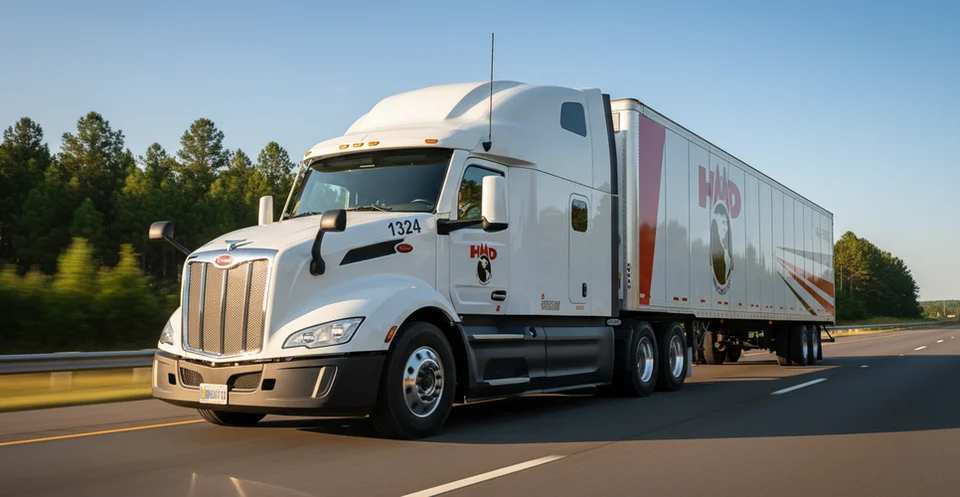
What Are the True Factors That Determine Truck Driver Salary in North Carolina?
The stability and growth of the truck driver salary in North Carolina are defined by your choices, skills, and strategic planning.
Base mileage rates alone do not reflect real earnings. An OTR driver earning 62 per mile across 2,500 weekly miles earns a $1,550 base. Adding detention pay ($25 to $40 per hour after two hours), layover compensation ($150 to $200 per day), stop pay, and a $100 clean inspection bonus raises total earnings to an effective rate of 67 to 71 per mile.
Experience and Seniority are Rewarded
The path to a top-tier salary is directly tied to the calendar. Carriers value proven consistency and a clean record, which reduces their liability.
Entry-Level (0–1 Year): New CDL drivers start low, sometimes in the $34,500 to $50,000 annual range, as they build crucial mileage and safety history.
Senior Drivers (5+ Years): Highly experienced OTR professionals become absolutely essential assets. They command high-paying loads, accessorial pay, and the best CPM, driving their earnings to well over $80,000 and up to $120,000 or more.
Endorsements are Income Multipliers
Acquiring specialized endorsements on your CDL immediately makes you eligible for high-demand, high-premium freight.
Hazmat (H) Endorsement: Required for transporting dangerous goods (e.g., chemicals, gasoline). Because a Hazmat incident carries higher risk and requires specialized regulatory compliance, this endorsement commands a substantial bonus or premium CPM.
Tanker (N) Endorsement: Necessary for hauling bulk liquids or gases. This generally adds an extra $3,000 to $7,000 per year to your base salary because of the specialized skill required to manage cargo instability.
Pay Structure: CPM vs. Percentage
The structure of your pay determines your financial risk profile:
Cents Per Mile (CPM): The standard OTR method, providing consistency and making it easier to track and predict your income based on miles driven.
Percentage of Load: Typically 20%–35% for company drivers. Your pay is directly tied to the load's revenue. This is fantastic when freight rates are booming but can lead to sharp drops in income when the market softens.
Owner-Operator Potential: The High-Risk Ceiling
Independent owner-operators running out of North Carolina freight hubs gross between $190,000 and $290,000 annually. However, after subtracting commercial diesel ($48,000–$66,000), equipment lease or finance notes ($24,000–$34,000), physical damage/bobtail insurance ($10,000–$14,000), maintenance reserves, and IFTA taxes, realistic net take-home pay settles between $70,000 and $120,000.
Looking Ahead to 2026 and Beyond
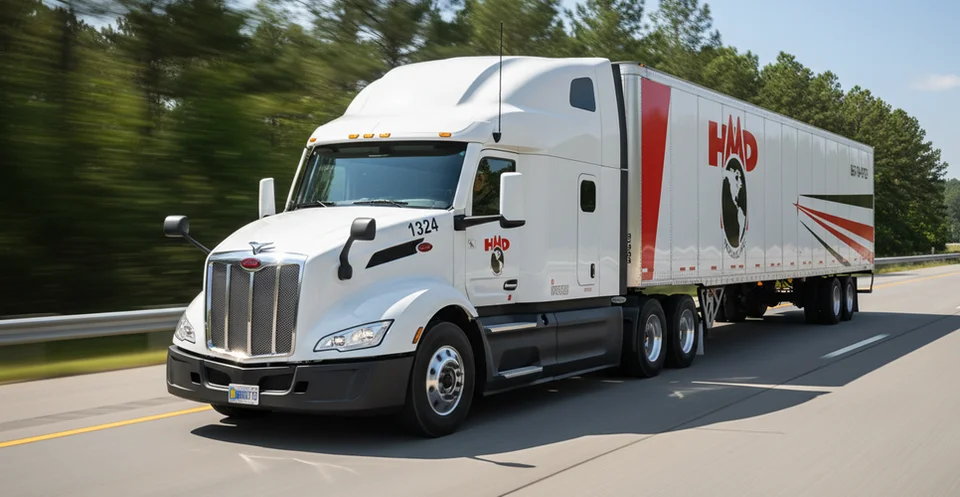
Expanding manufacturing plants, e-commerce distribution centers, and high interstate freight density make North Carolina a prime market for commercial CDL drivers. Reaching top earnings requires choosing a carrier that pairs high base mileage pay with guaranteed accessorial compensation and modern equipment. At HMD Trucking, we support our drivers with late-model 2023–2027 Peterbilt 579 tractors powered by PACCAR MX-13 engines, factory auxiliary power units (APUs), and a $100 clean inspection bonus for zero-violation roadside checks. We have immediate openings for professional Class A CDL drivers with at least six months of verifiable experience in Charlotte, Durham, Fayetteville, Greensboro, Raleigh and Winston-Salem across our Dry Van and Flatbed divisions, as well as high-earning Hazmat team routes (up to 84 CPM split). Apply online today to review open lanes and pay packages with our recruiting specialists.