How to Get Better Gas Mileage in a Truck While Staying Eco-Friendly?
by Michael Mahler — HMD Trucking
The cost of fuel is around 30-35% of all variable expenses of the motor carrier's total operating cost; it is the largest variable expense involved in commercial transportation. One may hear a lot about increasing the miles per gallon in trucks, but class 8 tractor-trailers operate on ultra-low sulfur diesel (ULSD). This type of fuel has 138,500 BTUs per gallon, which means significantly more energy than gasoline. It provides high torque at low engine speed. To achieve an increase in fuel economy of 6.5 mpg to 7.8 mpg for long-haul tractors, which operate on 100,000 to 120,000 miles per year, it takes saving 2,500 gallons of fuel per year for each tractor. To enhance fuel economy, one needs to find the optimal aerodynamic form of the truck and trailer, apply progressive shifting, maintain proper tire pressure, and reduce auxiliary power usage. The following guide explains the technical aspect of improving Class 8 fuel efficiency.
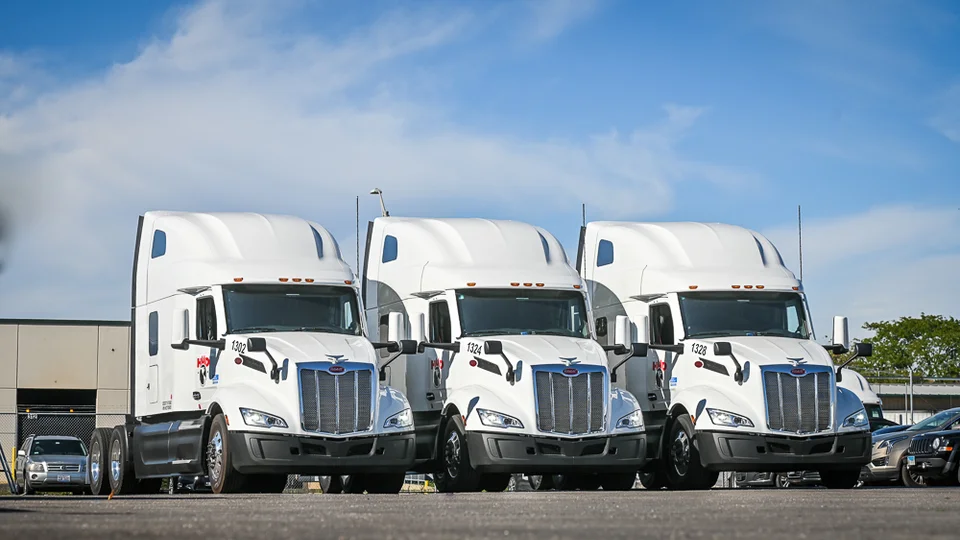
The difference in fuel efficiency between these two semi-truck types can also be attributed to a significant difference in fuel energy density, combustion process and technology in general. However it ought to be noted that diesel trucks typically have lower idling fuel economy.
While gasoline automobiles dominate the US market, trucks and buses are now almost exclusively diesel-powered. So, in this article we will focus on diesel trucks.
Semi-Truck Fuel Capacity
Let us learn more about semi-truck fuel capacity.
How Many Gallons of Diesel Does a Semi Hold?
The amount of diesel that a semi-truck can hold varies depending on the size and configuration of the truck's fuel tanks, and a typical 18 wheeler can hold a fuel reserve of 120 to 150 gallons. However, this is the typical range, and certain trucks may have larger or smaller fuel tanks depending on their requirements and hauling capacity (100 - 300 gallons).
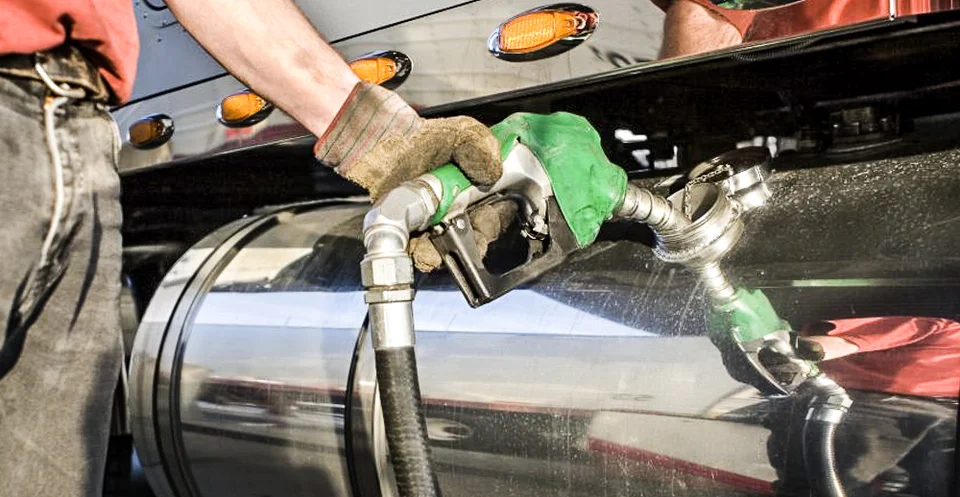
Each tank is positioned on either side of the vehicle, and diesel is distributed between them to maintain a proper balance. Considering that the weight of diesel fuel is about 7 pounds per gallon, this means that a full tank of fuel can weigh anywhere between 875 and 2100 pounds.
How to Use Available Fuel More Efficiently?
When it comes to managing fuel in semi trucks, drivers should aim at filling up their tanks to approximately 95% of the total fuel volume, regardless of whether it is 120 or 150 gallons.
The practice is recommended for a few important reasons:
Leaving a small amount of space in the tank allows for some air to be present, preventing potential spills from the fuel storage system. Overfilling the tank can lead to diesel fuel spilling out through the overflow valves, resulting in both fuel wastage and environmental hazards that could harm fellow drivers.
It is also advisable for drivers to never let the fuel tank remain completely empty. Most truckers avoid letting the fuel level drop below 25%. This precaution is important because contaminants like dirt and bacteria tend to accumulate at the bottom of large fuel tanks. Moreover, the suction system in place is designed to draw fuel from above the very bottom of the tank, further reinforcing the need to maintain a minimum fuel level.
By following these guidelines, truck drivers can minimize the risk of spills and avoid potential issues associated with pollutant buildup in their fuel tanks, thus improving the overall fuel economy of semi-trucks.
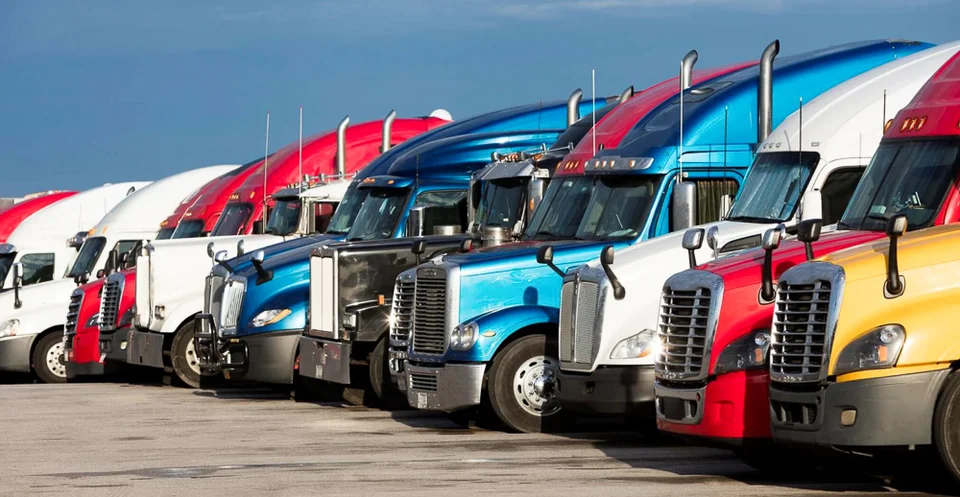
How Many Mpg Do Diesel Trucks Get?
The semi trucks mpg value is crucial or the fuel economy. Mpg is an abbreviation for miles per gallon, representing the distance the vehicle can cover for each consumed gallon of fuel.
On average, mpg for diesel trucks is typically around 6 to 8. However, this can vary significantly based on the specific truck and its characteristics.
One more important factor that we should keep in mind is the idle fuel efficiency and idle fuel economy, which we are going to discuss in the next section.
How Much Fuel Does a Semi Truck Use Idling?
Uncontrolled idling of engines leads to wastage of fuel and wears down the engines in commercial fleets:
Main-Engine Idle Fuel Consumption: A 13–15-liter Class 8 diesel engine idling at base idle (600-800 RPM) consumes 0.6-0.9 gallons of diesel per hour. In the course of eight to ten hours of rest periods, long idling results in the wastage of six to nine gallons of fuel due to cylinder washing, oil dilution, and excess soot formation in DPFs.
Auxiliary Power Units (APUs): Operation of a diesel-powered APU brings down fuel consumption to 0.15-0.25 gallons per hour for running the sleeper cab air conditioner, bunk heating, and 120V household appliances. The fully electric, battery-powered APUs eliminate idle fuel consumption during 10-hour rest periods mandated by regulations.
Automatic Engine Shutdown (AES) System: Modern fleet telematics control the five-minute engine shutoff timer when the ambient temperature is in the range of 30°F to 80°F.
How Much Fuel Does a Loaded Diesel Semi Consume?
On average, a loaded semi trucks mpg is between 6 to 8 miles per gallon.
However, the fuel consumption of a loaded semi-truck can vary depending on various factors: the specific truck model, engine and engine efficiency, driving conditions, terrain, load weight, and driver behavior. Modern trucks can feature onboard fuel monitoring systems that provide real-time data on fuel consumption, allowing drivers to track and optimize fuel efficiency while driving.
According to the Society of Motor Manufacturers and Traders (SMMT), an average truck carrying a payload of 26 tons has an estimated fuel consumption of 13 gallons per 100 miles traveled.
How to Get Better Gas Mileage in a Truck?
Factors such as excessive idling, aerodynamic drag, tire pressure, vehicle maintenance and driver behavior play a significant role in influencing fuel consumption.
Proper tire pressure and vehicle maintenance, such as regular tune-ups and maintenance checks, ensure that the truck is running at its optimal level of fuel consumption.
In addition to this, certain driving techniques and habits like maintaining a steady speed, planning routes efficiently, and avoiding rapid acceleration or braking can all contribute to improving gas mileage. Let’s look at each of the driving habits in some more detail.
Aerodynamic drag is a high-power consumer during highway operations at 65 mph and beyond, using up 50 to 65 percent of total engine power.
EPA SmartWay Aerodynamic Packages: Large trucks and 53-foot trailers benefit from adding cab extenders, roof fairings, and full skirts on the chassis, undertray devices, and tail fairings (boat tails). This reduces wind drag at the rear of the trailer. This increases highway fuel efficiency by 6 to 10 percent.
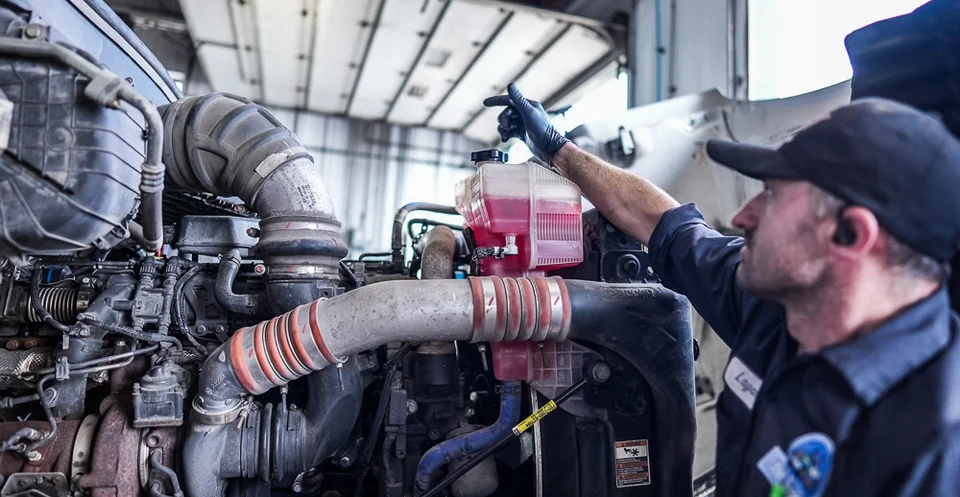
Tire Rolling Resistance and Pressure Management: Tire rolling resistance accounts for about one-third of total vehicle fuel consumption. Operating commercial tires 10 PSI below the manufacturer-recommended cold inflation pressure will increase rolling resistance and reduce fuel economy by about 1 percent. Fleets use EPA SmartWay–certified low rolling resistance tires with Automatic Tire Inflation Systems (ATIS) or Tire Pressure Monitoring Systems (TPMS). Tire operating pressures should be 100 to 110 PSI at all 18-wheel positions.
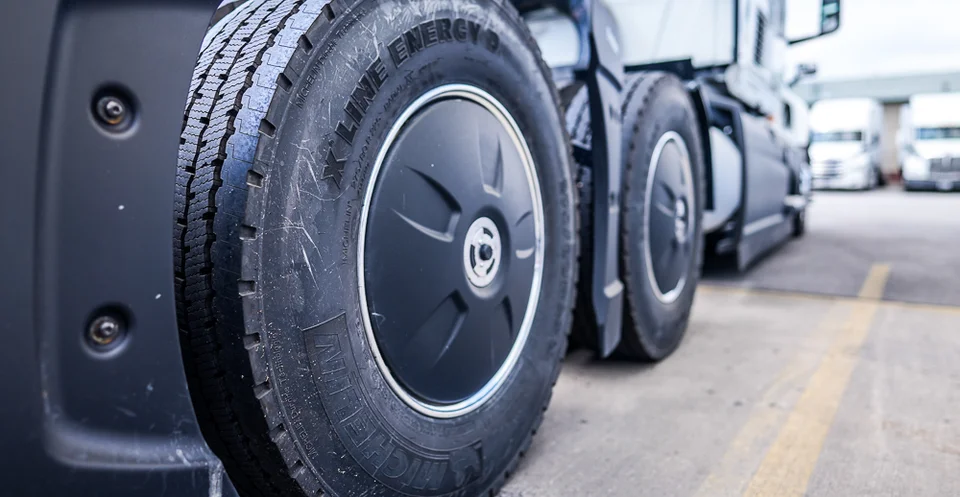
Emission Control System Functionality: Today's heavy-duty diesel engines utilize selective catalytic reduction (SCR) and diesel exhaust fluid (DEF) dosing technology and do not use automotive-style oxygen sensors. Proper air-fuel ratio requires fixing of exhaust manifold leaks, charge-air cooler pressure adjustment, and cleaning of dirty air filters to prevent waste of DEF through unnecessary DPF regenerations.
Calibration of modern Class 8 powertrains employs the practice of downspeeding, which improves fuel efficiency at lower RPMs:
Operation of the Engine in its "Sweet Spot": State-of-the-art diesel engines (for example, PACCAR MX-13 and Cummins X15) in conjunction with AMTs reach maximum torque (which is up to 1,850 lb-ft) at 1,000 and 1,250 RPM. Operation at the lower RPMs allows for less engine internal friction and hence fuel savings compared to the traditional legacies of shifting above 1,500 RPM.

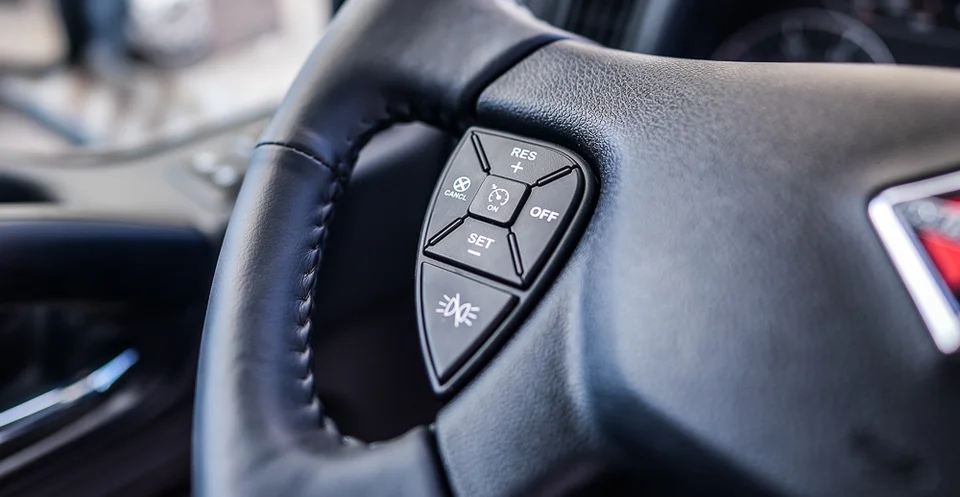
Predictive Terrain Cruise Control: Modern-day telematics of commercial vehicles connect topographical data received from GPS with shift schedules of the automated transmissions. The predictive cruise control system makes acceleration before ascending hills, after which the vehicle shifts into neutral (called e-coasting) over a crest while using its own momentum to descend the hill.
The Physics of Speed Selection: Air drag increases as a square of vehicle speed. Using the rule of thumb regarding aerodynamic drag of commercial trucks, each mile per hour over 65 results in a reduction in MPG by 0.1 MPG. Running at a governed speed from 62 to 65 miles/hour brings a better economy of fuel than speeds of 70 miles/hour and higher.
Reduce Drag of the Truck
Aerodynamic drag can significantly impact fuel efficiency, especially at higher speeds. Keep the truck's windows closed while driving on highways, as open windows create additional drag. Consider adding aerodynamic features like wind deflectors or streamlined side mirrors to reduce air resistance.
Leverage Technology
Take advantage of technology advancements, such as onboard telematics and fuel management systems.
These systems provide the following:
real-time data on fuel consumption.
information about the driving behavior.
recommendations on route optimization.
All of these will help you to make informed decisions and improve efficiency.
Optimize the Route
Planning your route effectively can help to minimize mileage and reduce fuel consumption. Always use navigation systems or route planning applications that consider factors like traffic congestion and road conditions, and keep your maps up to date. By choosing the most efficient route, you can reduce idling time, avoid unnecessary stops and starts, and optimize fuel efficiency.

Conclusion
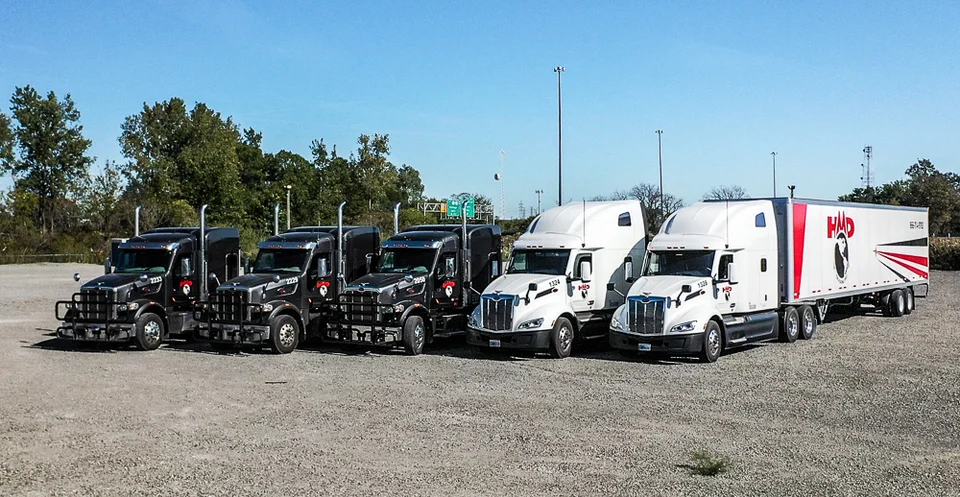
The best way to maximize fuel efficiency for commercial trucks is to combine good highway driving practices, automation of the powertrain system, and efficient aerodynamic equipment management. Control over road speed, reduction of idling, and monitoring cold tire pressure reduce the cost of fuel and increase the longevity of the engine and tire components. In HMD Trucking, all our trucks are designed with fuel efficiency and driver comfort in mind. Our fleet consists of late-model 2023-2027 Peterbilt 579 tractors equipped with fuel-efficient PACCAR MX-13 engines, automatic manual transmissions, complete chassis fairing, and APUs built into the trucks that maintain comfortable temperature inside the sleeper cab without using diesel from the main tank. We provide our drivers with stable mileage, quality equipment, and safety bonuses worth up to $100. Experienced professional drivers with Class A CDL and at least six months of experience can apply online now.